

Babi Yar Completed: 33,771 Jews Murdered in Two Days
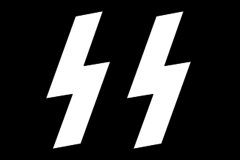
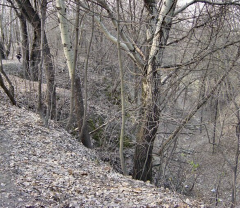
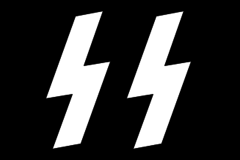
Over two days in late September 1941, German soldiers and police marched 33,771 Jewish men, women, and children to the edge of a ravine on the outskirts of Kiev and shot every one of them. The massacre at Babi Yar, completed on September 30, 1941, was the largest single mass shooting of the Holocaust and one of the most horrific acts of the entire war. The killings were carried out by Einsatzgruppe C, a mobile killing squad of the SS, supported by members of Police Battalion 45 and local Ukrainian auxiliary police. Wehrmacht units provided logistical support and sealed the area. The operation was commanded by SS-Standartenführer Paul Blobel under the overall authority of Einsatzgruppe C commander Otto Rasch. On September 28, notices were posted throughout Kiev ordering all Jews to report the next morning at the intersection of Melnikova and Dokhturov streets, bringing documents, money, and warm clothes. Most believed they were being resettled. An estimated 33,771 people, according to the Einsatzgruppen's own meticulous reports, arrived on September 29. They were marched in groups through a corridor of soldiers to the edge of the ravine, forced to strip naked, and machine-gunned in rows. Those who did not die immediately were buried alive under the next layer of bodies. The shooting continued for 36 hours straight, from September 29 through September 30. Truck engines were run at full throttle nearby to muffle the sound of gunfire and screaming. Babi Yar was not an isolated act of fury but a bureaucratic operation planned with administrative precision. The Einsatzgruppen Operational Situation Report No. 101, filed on October 2, recorded the number of victims with the clinical language of an inventory report. Similar massacres were carried out across Ukraine and the occupied Soviet territories throughout 1941 and 1942, killing over a million Jews before the construction of the extermination camps. The Soviet government suppressed the specifically Jewish character of the massacre for decades, describing the victims only as "Soviet citizens." The poet Yevgeny Yevtushenko challenged this erasure with his 1961 poem "Babi Yar," and Dmitri Shostakovich set it to music in his Thirteenth Symphony. A memorial was finally erected at the site in 1991, fifty years after the killing.
September 30, 1941
85 years ago
Key Figures & Places

What Else Happened on September 30
Fred Flintstone's feet were the engine and the brakes. The Flintstones premiered on ABC on September 30, 1960, animated by Hanna-Barbera as the first primetime …
Theoderic the Great had already beaten Odoacer once, at the Isonzo River. Odoacer retreated to Verona in 489, regrouped, and met the Ostrogoths again under the …
The Umayyad general Asad ibn Abdallah al-Qasri pushed his army deep into Central Asia in 737, further than any Arab force had gone. The Turgesh didn't meet him …
A magnitude 7.7 earthquake struck the Caucasus mountains under Seljuk rule on September 30, 1139, leveling cities and killing an estimated 230,000 to 300,000 pe…
At Morlaix in 1342, a small English force of around 1,500 men faced a French army three times its size — and won, by digging hidden trenches the night before ba…
He'd been exiled, disinherited, and given just enough rope to hang himself. Henry Bolingbroke took that rope and used it to strangle a king instead. Richard II …
Talk to History
Have a conversation with historical figures who witnessed this era. Ask questions, explore perspectives, and bring history to life.