Munich Agreement: Appeasement Emboldens Hitler
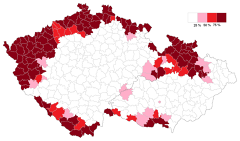
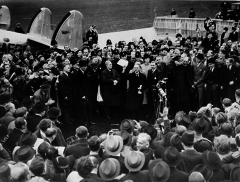
Neville Chamberlain stepped off the plane at Heston Aerodrome waving a piece of paper and declared "peace for our time." The date was September 30, 1938, and the paper was the Munich Agreement, which handed Adolf Hitler the Sudetenland region of Czechoslovakia without a shot being fired. Within a year, the peace Chamberlain promised was shattered, and the agreement had become the most infamous act of appeasement in modern history. The crisis began in the spring of 1938, when Hitler demanded the annexation of the Sudetenland, a mountainous border region of Czechoslovakia inhabited by roughly three million ethnic Germans. The Sudeten Germans, organized by the Nazi-funded Sudeten German Party under Konrad Henlein, staged protests and provocations designed to create a pretext for German intervention. Czechoslovakia was prepared to fight. Its army was well-trained and equipped, its border fortifications were formidable, and it had military alliances with both France and the Soviet Union. But Britain and France, haunted by memories of the Great War, were desperate to avoid another conflict. Chamberlain flew to meet Hitler three times in September 1938, each time conceding more territory. At Munich on September 29, Chamberlain, French Premier Édouard Daladier, Hitler, and Italian dictator Benito Mussolini signed the agreement in the early hours of September 30. Czechoslovakia was not invited to the conference that dismembered it. The Czechs were informed afterward and given a choice between acceptance and fighting Germany alone. They accepted, and Czech President Edvard Beneš called it a betrayal. Germany occupied the Sudetenland on October 1. In March 1939, Hitler violated the agreement and seized the rest of Czechoslovakia. Chamberlain, finally recognizing that appeasement had failed, extended security guarantees to Poland. When Germany invaded Poland on September 1, 1939, Britain and France declared war. Winston Churchill's judgment, delivered in the House of Commons after Munich, proved prophetic: "You were given the choice between war and dishonour. You chose dishonour and you will have war." The Munich Agreement permanently discredited appeasement as a foreign policy strategy and became the reference point for every subsequent debate about whether to confront or accommodate aggressive dictators.
September 30, 1938
88 years ago
Key Figures & Places
What Else Happened on September 30
Fred Flintstone's feet were the engine and the brakes. The Flintstones premiered on ABC on September 30, 1960, animated by Hanna-Barbera as the first primetime …
Theoderic the Great had already beaten Odoacer once, at the Isonzo River. Odoacer retreated to Verona in 489, regrouped, and met the Ostrogoths again under the …
The Umayyad general Asad ibn Abdallah al-Qasri pushed his army deep into Central Asia in 737, further than any Arab force had gone. The Turgesh didn't meet him …
A magnitude 7.7 earthquake struck the Caucasus mountains under Seljuk rule on September 30, 1139, leveling cities and killing an estimated 230,000 to 300,000 pe…
At Morlaix in 1342, a small English force of around 1,500 men faced a French army three times its size — and won, by digging hidden trenches the night before ba…
He'd been exiled, disinherited, and given just enough rope to hang himself. Henry Bolingbroke took that rope and used it to strangle a king instead. Richard II …
Talk to History
Have a conversation with historical figures who witnessed this era. Ask questions, explore perspectives, and bring history to life.