The Magic Flute Premieres: Mozart's Final Opera
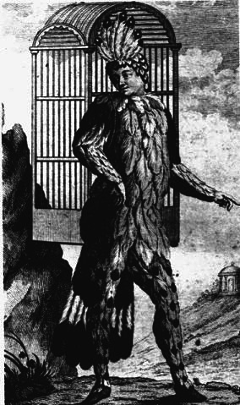
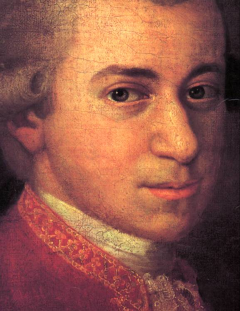
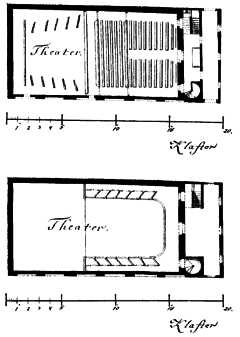
Wolfgang Amadeus Mozart was dying, though he did not yet know it, when he conducted the premiere of The Magic Flute at the Freihaus-Theater auf der Wieden in Vienna on September 30, 1791. The opera was a popular triumph, running for over a hundred consecutive performances, but Mozart had less than ten weeks to live. The Magic Flute was unlike anything Mozart had written before. His previous operas, The Marriage of Figaro, Don Giovanni, and Così fan tutte, were Italian-language works composed for the court opera. The Magic Flute was a Singspiel, a German-language popular entertainment mixing spoken dialogue with musical numbers, written for a suburban theater that catered to middle-class audiences rather than aristocrats. The librettist was Emanuel Schikaneder, an actor, impresario, and fellow Freemason who also played the role of the bird-catcher Papageno. The plot, drawing on Masonic symbolism, Egyptian mythology, and fairy tale convention, follows Prince Tamino and Papageno on a quest to rescue the princess Pamina from the sorcerer Sarastro. Beneath the fairy-tale surface, the opera explores themes of enlightenment, moral testing, and the triumph of wisdom over superstition that resonated deeply with the Masonic values both Mozart and Schikaneder shared. The music ranges from the comic accessibility of Papageno's folk-like songs to the terrifying virtuosity of the Queen of the Night's arias, which demand some of the highest notes in the soprano repertoire. The chorale-like solemnity of Sarastro's bass arias provides a contrasting gravity. The orchestration is simultaneously simple enough for a popular audience and sophisticated enough to reward close musical analysis. The premiere was a success, though Mozart reportedly noted from the orchestra pit that parts of the audience did not fully understand the Masonic allegory. The opera's popularity grew rapidly; by the time of Mozart's death on December 5, 1791, it had been performed dozens of times to packed houses. The Magic Flute became the most frequently performed opera in the German-speaking world and remains among the most staged works in the international repertoire. Mozart's final theatrical work proved that the highest art could reach the widest audience.
September 30, 1791
235 years ago
Key Figures & Places

What Else Happened on September 30
Fred Flintstone's feet were the engine and the brakes. The Flintstones premiered on ABC on September 30, 1960, animated by Hanna-Barbera as the first primetime …
Theoderic the Great had already beaten Odoacer once, at the Isonzo River. Odoacer retreated to Verona in 489, regrouped, and met the Ostrogoths again under the …
The Umayyad general Asad ibn Abdallah al-Qasri pushed his army deep into Central Asia in 737, further than any Arab force had gone. The Turgesh didn't meet him …
A magnitude 7.7 earthquake struck the Caucasus mountains under Seljuk rule on September 30, 1139, leveling cities and killing an estimated 230,000 to 300,000 pe…
At Morlaix in 1342, a small English force of around 1,500 men faced a French army three times its size — and won, by digging hidden trenches the night before ba…
He'd been exiled, disinherited, and given just enough rope to hang himself. Henry Bolingbroke took that rope and used it to strangle a king instead. Richard II …
Talk to History
Have a conversation with historical figures who witnessed this era. Ask questions, explore perspectives, and bring history to life.