

Willie Mays Makes The Catch: Baseball's Greatest Play
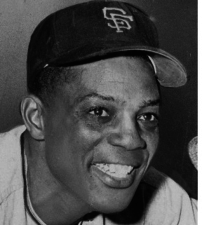
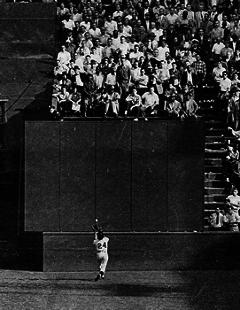
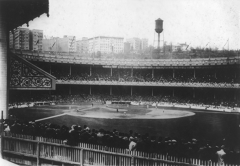
Vic Wertz hit a ball that should have been a triple. Willie Mays turned it into the most famous defensive play in baseball history. On September 29, 1954, in Game 1 of the World Series at the Polo Grounds in New York, Mays sprinted with his back to home plate, caught Wertz's 425-foot drive over his shoulder at a dead run, then spun and fired a throw back to the infield that prevented the runners from advancing. The play preserved a tie game that the New York Giants would win in extra innings. The setting amplified the drama. The Polo Grounds was a peculiar stadium with absurdly short foul lines and a cavernous center field that stretched nearly 475 feet from home plate. Wertz, batting for the Cleveland Indians with two runners on base and the score tied 2-2 in the eighth inning, crushed a pitch from Don Liddle to the deepest part of the park. Mays broke toward center field at the crack of the bat, running at full speed away from home plate. Most outfielders would have watched the ball sail over their heads. Mays, who had an uncanny ability to judge fly balls instantly off the bat, never looked back until the last possible moment. He extended his glove over his left shoulder at the warning track, caught the ball roughly 460 feet from home plate, and somehow kept his feet. What happened next was arguably more impressive than the catch itself. Mays whirled counterclockwise and threw a strike to the cutoff man, a feat of athletic coordination that prevented the runner on second from tagging and scoring. The inning ended without a run. The Giants went on to win 5-2 in ten innings and swept the heavily favored Indians in four straight games. Cleveland had won a then-record 111 games during the regular season and was expected to dominate the Series. Mays's catch in Game 1 shattered their confidence. "The Catch" endures because of its intersection of difficulty, stakes, and setting. Mays himself made more difficult plays during his career and said so repeatedly. But no other catch came in the first game of a World Series, with the outcome hanging in the balance, in front of 52,751 witnesses and a national television audience. The Polo Grounds was demolished in 1964, but the image of Mays running toward the bleachers, glove outstretched, number 24 on his back, remains frozen in American sports mythology.
September 29, 1954
72 years ago
Key Figures & Places

What Else Happened on September 29
Themistocles lured the massive Persian fleet into the narrow straits of Salamis, where the Greeks’ agile triremes systematically dismantled Xerxes’ superior num…
Pompey the Great celebrated his third triumph through the streets of Rome on September 29, 61 BC, his forty-fifth birthday, parading captured kings, gold, and a…
Pompey arranged his third Roman triumph to land exactly on his 45th birthday — a scheduling flex that was entirely intentional and entirely him. He paraded the …
Danish invaders breached Canterbury’s walls after a three-week siege, seizing Archbishop Ælfheah as a high-value hostage. This capture forced the English crown …
Frederick II kept promising to go on Crusade. He promised in 1215, again in 1220, again in 1227 — and kept not going. When he finally sailed in 1227 and turned …
King Henry III forced Llywelyn ap Gruffudd to accept the title of Prince of Wales only as his feudal vassal in the Treaty of Montgomery. This arrangement grante…
Talk to History
Have a conversation with historical figures who witnessed this era. Ask questions, explore perspectives, and bring history to life.