Bill of Rights Proposed: Congress Secures Liberties
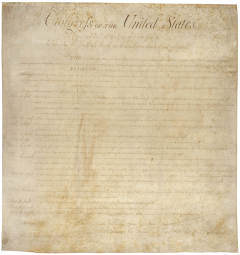
James Madison had promised, and now he had to deliver. On September 25, 1789, the first Congress approved twelve proposed amendments to the Constitution and sent them to the states for ratification. Ten would survive the process, becoming the Bill of Rights and permanently defining the boundaries between government power and individual liberty in the United States. The amendments were the price of ratification. During the fierce debates over the Constitution in 1787 and 1788, Anti-Federalists like George Mason and Patrick Henry had argued that the document's lack of explicit protections for individual rights made it a blueprint for tyranny. Several state conventions ratified only after receiving assurances that a bill of rights would be added. Madison, who initially considered such a list unnecessary, recognized that failure to follow through would threaten the new government's legitimacy. Working from over 200 proposals submitted by the state ratifying conventions, Madison distilled the list to seventeen amendments, which the House reduced to twelve. The Senate consolidated them further. The final twelve articles addressed everything from congressional pay and apportionment to freedom of speech, religion, and the press; the right to bear arms; protections against unreasonable search and seizure; and the guarantee of due process. The first two proposed amendments, dealing with congressional representation and compensation, failed to win immediate ratification. The compensation amendment eventually became the Twenty-seventh Amendment in 1992, 203 years after it was proposed. Articles three through twelve were ratified by the required three-fourths of state legislatures by December 15, 1791, becoming the First through Tenth Amendments. The Bill of Rights initially applied only to the federal government, not the states. Most protections were not extended to state and local governments until the Fourteenth Amendment's due process clause was interpreted to "incorporate" them, a process that unfolded gradually through Supreme Court decisions from the 1890s through the 1960s. Madison's reluctant compromise became the most celebrated feature of American constitutional law.
September 25, 1789
237 years ago
Key Figures & Places
What Else Happened on September 25
The Roman Senate reclaimed the rare authority to choose an emperor by proclaiming the elderly senator Marcus Claudius Tacitus after a two-month interregnum foll…
The Senate hadn't chosen an emperor in decades — power had passed through assassination, military coup, and dynastic succession. But in 275, with Aurelian dead …
Saint Fermin of Pamplona met his end by beheading in Amiens after traveling through Gaul to spread Christianity. His martyrdom transformed him into the patron s…
Muhammad al-Nafs al-Zakiyya — 'the Pure Soul' — had been expected to be the Mahdi since childhood, a man his own followers believed was destined to restore righ…
King Harold II of England crushed Harald Hardrada's Norwegian invasion at Stamford Bridge on September 25, 1066, killing the Norse king and annihilating his arm…
King Harold Godwinson’s forces crushed the army of Harald Hardrada at Stamford Bridge, ending the centuries-long era of Viking incursions into England. By elimi…
Talk to History
Have a conversation with historical figures who witnessed this era. Ask questions, explore perspectives, and bring history to life.