Nuclear Test Ban Treaty Signed at United Nations
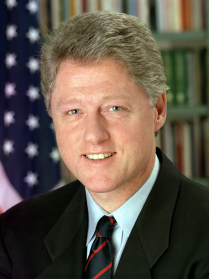
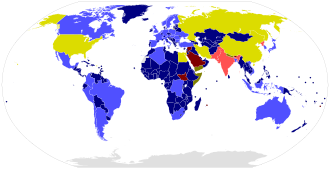
Fifty-one years after the bombings of Hiroshima and Nagasaki, representatives from 71 nations gathered at the United Nations headquarters in New York on September 24, 1996, to sign the Comprehensive Nuclear-Test-Ban Treaty, the most ambitious arms control agreement since the dawn of the atomic age. President Bill Clinton was the first to add his signature, calling it "the longest-sought, hardest-fought prize in arms control history." The road to the CTBT began in the radioactive fallout of the early Cold War. Between 1945 and 1996, the world's nuclear powers conducted over 2,000 test explosions, contaminating vast stretches of the Pacific, Central Asia, and the American Southwest. Public alarm over atmospheric testing, particularly after the 1954 Castle Bravo test showered a Japanese fishing vessel with lethal fallout, led to the 1963 Partial Test Ban Treaty, which pushed testing underground but did not stop it. Negotiations for a comprehensive ban stalled for decades as the nuclear powers insisted they needed continued testing to maintain their arsenals. The end of the Cold War broke the impasse. France and China conducted their final tests in 1996, and the treaty opened for signature that September. By the end of the first day, 71 countries had signed; within two years, the number exceeded 150. The treaty established the International Monitoring System, a global network of 337 seismological, hydroacoustic, infrasound, and radionuclide stations capable of detecting even small underground explosions anywhere on the planet. The system has proven remarkably effective, detecting all of North Korea's nuclear tests within minutes. The CTBT's weakness lies in its ratification requirements. The treaty cannot formally enter into force until 44 specific nations with nuclear technology ratify it. As of 2025, eight of those nations have not done so, including the United States, China, and Israel. The U.S. Senate rejected ratification in 1999, and no subsequent administration has resubmitted it. Despite never officially taking effect, the CTBT has established a powerful global norm. No country besides North Korea has conducted a nuclear test explosion since 1998.
September 24, 1996
30 years ago
Key Figures & Places

What Else Happened on September 24
Prophet Muhammad reached Medina after fleeing persecution in Mecca, successfully establishing the first independent Muslim community. This migration, known as t…
Bishops gathered at the Church of Holy Wisdom to resolve the fierce iconoclastic controversy that had fractured the Byzantine Empire for decades. By formally re…
Manuel I Komnenos died, ending the Komnenian restoration and leaving the Byzantine throne to his young, incompetent son. Without his steady hand to manage the e…
John Hawkins had sailed into the Mexican port of San Juan de Ulúa under a flag of truce, and the Spanish let him anchor while awaiting the annual treasure fleet…
Parliamentarian cavalry defeated a Royalist army personally commanded by King Charles I at Rowton Heath, forcing the king to watch the destruction of his relief…
Peter Stuyvesant surrendered New Amsterdam to an English naval squadron without firing a shot, ending Dutch colonial rule in North America. This transfer consol…
Talk to History
Have a conversation with historical figures who witnessed this era. Ask questions, explore perspectives, and bring history to life.