Bush Declares War on Terror: Global Conflict Begins
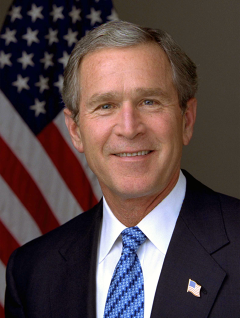
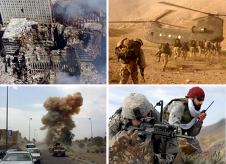
President George W. Bush stood before a joint session of Congress on the evening of September 20, 2001, nine days after the attacks that killed nearly 3,000 people, and declared a war unlike any the nation had fought before. "Our war on terror begins with al-Qaeda, but it does not end there," he told the lawmakers. "It will not end until every terrorist group of global reach has been found, stopped, and defeated." The speech framed the response to September 11 as an open-ended global campaign and defined the strategic posture of the United States for the next two decades. The address was delivered to a nation still in shock. Rescue workers were still pulling bodies from the rubble of the World Trade Center. The Pentagon was damaged and partially evacuated. Air travel had only just resumed after a four-day shutdown. Bush’s approval rating stood at 90 percent, and Congress had already passed a joint resolution authorizing the use of military force against those responsible for the attacks, with only one dissenting vote. Bush identified Osama bin Laden and al-Qaeda as the perpetrators and issued an ultimatum to the Taliban government of Afghanistan: hand over the terrorist leadership and close the training camps, or share their fate. The Taliban refused, and American and British forces began bombing Afghanistan on October 7. The Taliban regime collapsed within weeks, though bin Laden escaped into the mountains of Tora Bora and evaded capture for nearly a decade. The doctrine Bush articulated that evening extended far beyond Afghanistan. The phrase "war on terror" became the justification for a vast expansion of executive power, including warrantless surveillance, indefinite detention at Guantanamo Bay, enhanced interrogation techniques that critics called torture, and the 2003 invasion of Iraq, which the administration linked to the broader campaign despite tenuous connections to September 11. The Authorization for Use of Military Force passed on September 14, 2001, remained in effect for more than twenty years, providing legal cover for military operations in countries the original Congress never contemplated. The speech launched an era that reshaped American foreign policy, civil liberties, and the federal budget, with defense and homeland security spending exceeding six trillion dollars.
September 20, 2001
25 years ago
Key Figures & Places
What Else Happened on September 20
The Greek fleet, outnumbered and cornered in the narrow strait between the island of Salamis and the Attic mainland, destroyed the Persian navy on September 20,…
The Battle of the Catalaunian Plains — sometimes called Chalons — in 451 AD was one of those rare days when everything turned on a single general's decision. Fl…
Muhammad and Abu Bakr reached the oasis of Yathrib, later renamed Medina, after completing their perilous migration from Mecca. This arrival ended the Hijra and…
Agnes of Poitou was regent of the Holy Roman Empire — ruling on behalf of her six-year-old son Henry IV — when she met Andrew I of Hungary to negotiate borders …
Harald Hardrada’s Viking forces crushed the armies of Earls Morcar and Edwin at the Battle of Fulford, shattering the northern English defense. This decisive vi…
Saladin had been maneuvering for months before his army reached Jerusalem's walls in September 1187. The city's defenders were badly outnumbered — most of the k…
Talk to History
Have a conversation with historical figures who witnessed this era. Ask questions, explore perspectives, and bring history to life.