

Italy Unified: Bersaglieri Enter Rome Through the Porta Pia
Bersaglieri troops burst through the Porta Pia to seize Rome, compelling the Pope's temporal power to end and completing Italian unification under Victor Emmanuel II. This military breakthrough immediately transformed the city into the capital of a unified kingdom, ending decades of political fragmentation.
September 20, 1870
156 years ago
Key Figures & Places
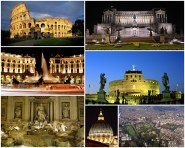
Rome
Wikipedia
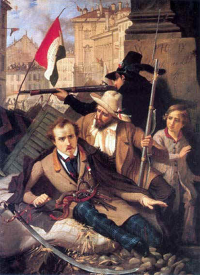
Italian unification
Wikipedia

Bersaglieri
Wikipedia

Porta Pia
Wikipedia
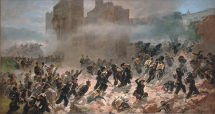
capture of Rome
Wikipedia

Capture of Rome
Wikipedia

Papal States
Wikipedia

Unification of Italy
Wikipedia

Victor Emmanuel II
Wikipedia

Camillo Benso, Count of Cavour
Wikipedia

Giuseppe Garibaldi
Wikipedia

Guerra Grande
Wikipedia

Juan Manuel de Rosas
Wikipedia

Gualeguaychú
Wikipedia

Provincia de Entre Ríos
Wikipedia

Pope Leo XIII
Wikipedia

Kingdom of Italy
Wikipedia

Porta Pia
Wikipedia
Encyclical
Wikipedia

Rosaire
Wikipedia
Fidentem piumque animum
Wikipedia

Bersaglieri
Wikipedia

Rome
Wikipedia

Italy
Wikipedia

Italian Army
Wikipedia
What Else Happened on September 20

Athenian triremes lured the massive Persian fleet into narrow straits and shattered their formation, compelling Xerxes to retreat with his army intact but his n…
Se produjo un eclipse de lunar. En la antigüedad era un presagio de malos acontecimientos.
The Battle of the Catalaunian Plains — sometimes called Chalons — in 451 AD was one of those rare days when everything turned on a single general's decision. Fl…
algunos historiadores datan en esta jornada la batalla de los Campos Cataláunicos, en la que Flavio Aecio dirige a las tropas romanas y visigodas en su victoria…
Muhammad and Abu Bakr reached the oasis of Yathrib, later renamed Medina, after completing their perilous migration from Mecca. This arrival ended the Hijra and…
Agnes of Poitou was regent of the Holy Roman Empire — ruling on behalf of her six-year-old son Henry IV — when she met Andrew I of Hungary to negotiate borders …
Talk to History
Have a conversation with historical figures who witnessed this era. Ask questions, explore perspectives, and bring history to life.