Magellan Sails West: Quest to Circle the Globe
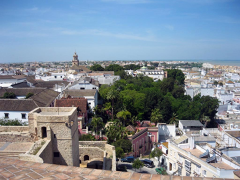
Ferdinand Magellan sailed from Sanlucar de Barrameda on September 20, 1519, with five ships and roughly 270 men, bound for a passage through South America that no European had ever found and a destination none of his crew could truly imagine. The expedition would complete the first circumnavigation of the globe, proving once and for all that the Earth was round and that the oceans were connected. Magellan himself would not survive to see it, killed in a skirmish on a Philippine beach less than halfway through the voyage. Magellan was Portuguese by birth but sailed under the Spanish flag, having been rebuffed by King Manuel I of Portugal when he proposed the westward voyage to the Spice Islands. King Charles I of Spain, eager to challenge Portugal’s monopoly on the eastern spice trade, funded the expedition. The fleet consisted of the Trinidad, San Antonio, Concepcion, Victoria, and Santiago, aging cargo vessels that had been refitted for the journey. Relations between Magellan and his Spanish captains were hostile from the start. The fleet spent months working down the coast of South America, enduring a mutiny that Magellan crushed by executing one captain and marooning another. In October 1520, they entered the strait at the southern tip of the continent that now bears Magellan’s name, a treacherous 350-mile passage through glacial mountains and howling winds that took thirty-eight days to navigate. The San Antonio deserted and sailed back to Spain. When the remaining ships emerged into the Pacific, Magellan wept with relief, naming the ocean for its unexpected calm. The Pacific crossing was a nightmare. The ocean was far larger than anyone had calculated, and the fleet sailed for ninety-eight days without sighting land. The crew ate sawdust, leather strips from the rigging, and rats, which sold for half a ducat apiece. Nineteen men died of scurvy before they reached Guam. Magellan was killed on April 27, 1521, on the island of Mactan in the Philippines, struck down in a battle he had provoked by attempting to convert the local chief to Christianity. Juan Sebastian Elcano took command of the Victoria, the sole surviving ship, and limped back to Spain on September 6, 1522, with eighteen gaunt survivors. They had sailed roughly 42,000 miles.
September 20, 1519
507 years ago
Key Figures & Places
What Else Happened on September 20
The Greek fleet, outnumbered and cornered in the narrow strait between the island of Salamis and the Attic mainland, destroyed the Persian navy on September 20,…
The Battle of the Catalaunian Plains — sometimes called Chalons — in 451 AD was one of those rare days when everything turned on a single general's decision. Fl…
Muhammad and Abu Bakr reached the oasis of Yathrib, later renamed Medina, after completing their perilous migration from Mecca. This arrival ended the Hijra and…
Agnes of Poitou was regent of the Holy Roman Empire — ruling on behalf of her six-year-old son Henry IV — when she met Andrew I of Hungary to negotiate borders …
Harald Hardrada’s Viking forces crushed the armies of Earls Morcar and Edwin at the Battle of Fulford, shattering the northern English defense. This decisive vi…
Saladin had been maneuvering for months before his army reached Jerusalem's walls in September 1187. The city's defenders were badly outnumbered — most of the k…
Talk to History
Have a conversation with historical figures who witnessed this era. Ask questions, explore perspectives, and bring history to life.