

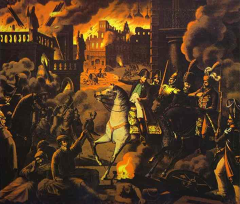
Fire of Moscow Dies Down: Three-Quarters of the City Destroyed
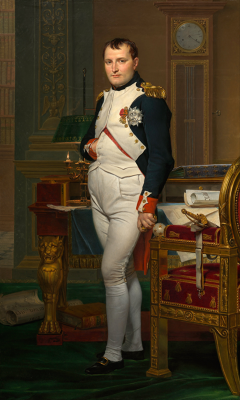
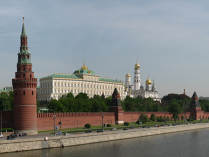
The great fire of Moscow finally subsided after destroying over three-quarters of the city, leaving Napoleon's Grande Armee sheltering in ruins without food, fodder, or winter supplies. The devastation forced Napoleon to abandon his plans to winter in Moscow, beginning the catastrophic retreat that would destroy his army and shatter his aura of invincibility.
September 18, 1812
214 years ago
Key Figures & Places


What Else Happened on September 18
The Roman Senate formally confirmed Tiberius as emperor, solidifying the transition of power after Augustus died of natural causes. This peaceful succession pro…
Tiberio es confirmado como emperador romano por el Senado.
Court officials and his own wife, Domitia, orchestrated the assassination of Emperor Domitian, ending his fifteen-year reign of terror. The Senate immediately p…
The Roman Senate proclaimed Nerva emperor immediately following Domitian’s assassination, ending the Flavian dynasty’s erratic rule. By choosing a respected eld…
las tropas imperiales romanas al mando de Crispo derrotan a Licinio en la batalla naval de Crisópolis.

Licinius had ruled the eastern half of the Roman Empire for years, but Constantine had been closing the distance. The Battle of Chrysopolis on September 18, 324…
Talk to History
Have a conversation with historical figures who witnessed this era. Ask questions, explore perspectives, and bring history to life.