

Red Baron's First Kill: Richthofen Begins His Legend
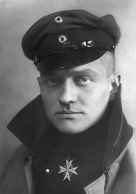
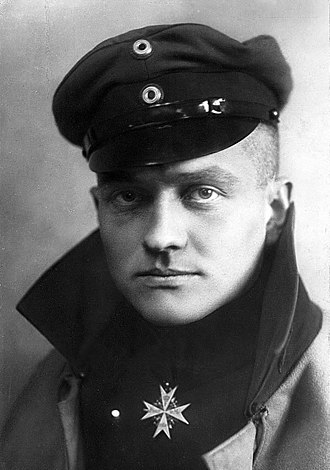
Manfred von Richthofen scored his first aerial victory on September 17, 1916, shooting down a British FE.2b two-seat reconnaissance aircraft over Villers-Plouich on the Western Front. The twenty-four-year-old Prussian cavalryman turned pilot would go on to claim eighty confirmed kills, more than any other aviator in the First World War, earning the title of the Red Baron and becoming the most famous fighter ace in the history of aerial combat. Richthofen had transferred to the air service in 1915 after growing bored with the static trench warfare that had rendered his cavalry unit obsolete. He initially served as an observer before training as a pilot, and his early career was unremarkable. His fortunes changed when he attracted the attention of Oswald Boelcke, Germany’s leading ace and the father of fighter tactics, who recruited Richthofen into his elite unit, Jagdstaffel 2. Under Boelcke’s mentorship, Richthofen developed the disciplined, calculating approach to air combat that would define his career. His method was methodical rather than flamboyant. Richthofen preferred to attack from above and behind, using the sun as concealment, closing to short range before firing, and breaking off when the advantage was lost. He studied his opponents’ aircraft for structural weaknesses and aimed for engines and pilots rather than wasting ammunition on wings and fuselage. He painted his Albatros D.III and later his Fokker Dr.I triplane in bright red, partly for identification by friendly forces and partly as a psychological weapon. Richthofen commanded Jagdgeschwader 1, known as the Flying Circus for its brightly painted aircraft, which became the most feared fighter unit on the Western Front. His eighty victories came over a span of less than two years, an extraordinary rate of destruction. He was killed on April 21, 1918, shot through the chest during a low-level pursuit over the Somme. Whether the fatal round came from Australian ground fire or Canadian pilot Arthur Roy Brown’s guns remains one of the enduring debates of aviation history. The RAF buried him with full military honors.
September 17, 1916
110 years ago
Key Figures & Places




What Else Happened on September 17
Remistus had been magister militum — essentially commander of the Western Roman army — but by 456 that title meant less than it once had. A Gothic force besiege…
Alfonso VII was three years old when his father died, and his mother was immediately pressured to remarry and cede control. He spent his childhood under the pro…
Emperor Manuel I Komnenos had been pushing into Anatolia for years, reclaiming territory, winning battles, dreaming of a restored empire. Then at Myriokephalon …
Mary of Hungary was crowned 'king' — not queen, but king — in September 1382, because the Hungarian nobility didn't have a mechanism for a female ruler and refu…
Polish forces routed the Teutonic Knights at the Battle of Swiecino during the Thirteen Years' War, capturing the Order's field commander and shattering their r…
Piotr Dunin’s forces crushed the Teutonic Order at the Battle of Świecino, shattering the Knights' military dominance in the region. This victory forced the Ord…
Talk to History
Have a conversation with historical figures who witnessed this era. Ask questions, explore perspectives, and bring history to life.