Constitution Signed: American Democracy Established
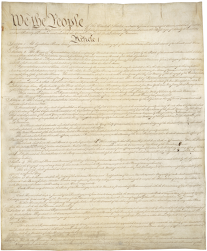
Thirty-nine delegates signed their names to a four-page document in the Assembly Room of the Pennsylvania State House on September 17, 1787, completing a task that had consumed four months of secret deliberation during the hottest summer anyone in Philadelphia could remember. The United States Constitution replaced the failing Articles of Confederation with a framework of government so durable that it remains the oldest written national constitution still in force, amended only twenty-seven times in nearly two and a half centuries. The delegates who gathered in May 1787 had been authorized only to revise the Articles, not to draft an entirely new system of government. Within days, Virginia’s delegation presented a plan for a bicameral legislature, a national executive, and an independent judiciary that amounted to a complete replacement. The ensuing debates were fierce. Large states wanted representation proportional to population; small states demanded equal representation. Slave states insisted that enslaved people be counted for apportionment purposes; Northern delegates objected. The Connecticut Compromise produced a Senate with equal state representation and a House based on population, while the Three-Fifths Compromise counted each enslaved person as three-fifths of a free person for census purposes. The framers, led by James Madison, Alexander Hamilton, and Gouverneur Morris, built a system of separated powers and overlapping checks designed to prevent any single faction from dominating the government. The presidency was a novel invention, an elected executive powerful enough to govern but constrained by congressional oversight and judicial review. The amendment process was deliberately difficult, requiring supermajorities in Congress and ratification by three-quarters of the states. Benjamin Franklin, eighty-one years old and too frail to stand for long, offered the closing remarks. He confessed that the document was imperfect but urged every member to "doubt a little of his own infallibility" and sign. Three delegates, Edmund Randolph, George Mason, and Elbridge Gerry, refused. The ratification battle that followed was bitter, producing the Federalist Papers and the promise of a Bill of Rights that secured the necessary nine-state majority. The Constitution took effect on March 4, 1789, and the experiment in self-governance that skeptics across Europe predicted would fail has outlasted every monarchy and empire that doubted it.
September 17, 1787
239 years ago
Key Figures & Places
What Else Happened on September 17
Remistus had been magister militum — essentially commander of the Western Roman army — but by 456 that title meant less than it once had. A Gothic force besiege…
Alfonso VII was three years old when his father died, and his mother was immediately pressured to remarry and cede control. He spent his childhood under the pro…
Emperor Manuel I Komnenos had been pushing into Anatolia for years, reclaiming territory, winning battles, dreaming of a restored empire. Then at Myriokephalon …
Mary of Hungary was crowned 'king' — not queen, but king — in September 1382, because the Hungarian nobility didn't have a mechanism for a female ruler and refu…
Polish forces routed the Teutonic Knights at the Battle of Swiecino during the Thirteen Years' War, capturing the Order's field commander and shattering their r…
Piotr Dunin’s forces crushed the Teutonic Order at the Battle of Świecino, shattering the Knights' military dominance in the region. This victory forced the Ord…
Talk to History
Have a conversation with historical figures who witnessed this era. Ask questions, explore perspectives, and bring history to life.