

Tabas Earthquake: 25,000 Perish in Iran
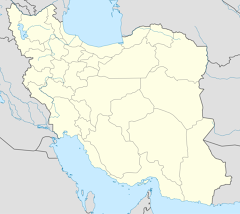
The city of Tabas in eastern Iran was virtually erased from the map on September 16, 1978, when an earthquake measuring 7.8 on the Richter scale struck at 7:35 p.m. local time. Roughly 25,000 people died, most of them buried beneath the collapse of traditional mud-brick buildings that offered almost no resistance to the violent shaking. The earthquake destroyed 85 percent of the city’s structures and killed an estimated 40 percent of its population, making it one of the deadliest seismic events of the twentieth century. Tabas sat near the junction of several active fault systems at the western edge of the Lut Desert, a region where the Arabian tectonic plate grinds against the Eurasian plate. The area had experienced moderate earthquakes before, but nothing of this magnitude in recorded history. The main shock was followed by hundreds of aftershocks, some exceeding magnitude 5, which collapsed structures that had survived the initial event and hampered rescue efforts. The timing of the earthquake compounded the human toll. The shock struck in the early evening, when families had gathered indoors for dinner. The heavy mud-brick and timber roofs of traditional Persian architecture, designed to insulate against the desert heat, became lethal crushing weights when the walls beneath them gave way. Many survivors were trapped for days without water in the desert heat before rescuers could reach them. The nearest major city, Birjand, was over 200 kilometers away across difficult terrain, and Iran’s road infrastructure in the region was minimal. The disaster struck during one of the most turbulent periods in Iranian history. The revolution against Shah Mohammad Reza Pahlavi was accelerating, with massive protests and strikes paralyzing the country. The government’s slow and disorganized response to the earthquake further eroded public confidence in the monarchy. Ayatollah Khomeini, then in exile in Iraq, used the disaster to criticize the regime’s priorities and competence. Within five months, the Shah had fled Iran and the Islamic Revolution had reshaped the Middle East. Tabas was rebuilt in subsequent decades, but with earthquake-resistant construction standards that reflected the hard lessons of September 1978.
September 16, 1978
48 years ago
Key Figures & Places


What Else Happened on September 16
Severus II had been handed the western Roman Empire by Galerius, but Maxentius — the son of the retired emperor Diocletian — refused to recognize him and raised…
The Sixth Ecumenical Council condemned Pope Honorius I for heresy, formally excommunicating him decades after his death. This rare rebuke shattered the doctrine…
Owain Glyndŵr accepted the title of Prince of Wales from his followers, igniting a fierce, decade-long rebellion against English rule. This uprising crippled th…
There were 102 passengers crammed onto the Mayflower, but the ship wasn't meant for them — it was a cargo vessel, roughly 100 feet long, still reeking of the wi…
His father died in exile, and he was thirteen years old. James Francis Edward Stuart inherited the Jacobite claim to the British throne on September 16, 1701, o…
Campo Maior was a small Portuguese frontier town of maybe 2,000 people. In 1732, lightning hit the town's armory during a storm. The resulting explosion didn't …
Talk to History
Have a conversation with historical figures who witnessed this era. Ask questions, explore perspectives, and bring history to life.