Wall Street Bombed: 38 Killed in 1920 Terror Attack
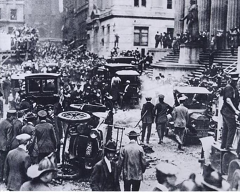
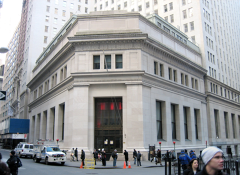
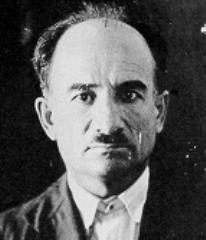
A horse-drawn wagon packed with 100 pounds of dynamite and 500 pounds of cast-iron sash weights exploded at the corner of Wall and Broad Streets at 12:01 p.m. on September 16, 1920, just as lunchtime crowds poured out of the financial district’s banks and brokerage houses. The blast killed 38 people and wounded over 400, shredding bodies with shrapnel that gouged scars into the limestone facade of the J.P. Morgan building that remain visible more than a century later. The bombing was the deadliest act of terrorism in the United States until the Oklahoma City attack seventy-five years later. The wagon had been parked directly across the street from the Morgan bank’s headquarters, the symbolic and literal center of American capitalism. The timing, seconds after the noon bells of Trinity Church rang, ensured maximum casualties among office workers on their lunch break. The horse and wagon were obliterated, and the blast blew out windows for blocks in every direction. No one was ever convicted of the attack. The Bureau of Investigation, predecessor to the FBI, pursued leads for years, focusing primarily on Italian anarchist groups inspired by Luigi Galleani, the same movement responsible for a series of package bombs and the 1919 bombings that targeted Attorney General A. Mitchell Palmer’s home. The leading suspect, Mario Buda, an associate of Sacco and Vanzetti, reportedly fled to Italy shortly after the explosion. The case was officially closed in 1940 without charges. The bombing occurred during a period of intense social upheaval known as the First Red Scare. Labor strikes, anarchist bombings, and the recent Russian Revolution had created widespread fear of radical subversion. The Palmer Raids of 1919-1920 had rounded up thousands of suspected radicals for deportation. Wall Street reopened the next morning in a deliberate display of defiance, and the Morgan bank refused to repair the shrapnel damage to its facade, treating the scars as a monument to resilience. The attack is largely forgotten today, overshadowed by the terrorism of later eras, but it established a template for political violence aimed at financial centers that has been repeated throughout the decades since.
September 16, 1920
106 years ago
Key Figures & Places
What Else Happened on September 16
Severus II had been handed the western Roman Empire by Galerius, but Maxentius — the son of the retired emperor Diocletian — refused to recognize him and raised…
The Sixth Ecumenical Council condemned Pope Honorius I for heresy, formally excommunicating him decades after his death. This rare rebuke shattered the doctrine…
Owain Glyndŵr accepted the title of Prince of Wales from his followers, igniting a fierce, decade-long rebellion against English rule. This uprising crippled th…
There were 102 passengers crammed onto the Mayflower, but the ship wasn't meant for them — it was a cargo vessel, roughly 100 feet long, still reeking of the wi…
His father died in exile, and he was thirteen years old. James Francis Edward Stuart inherited the Jacobite claim to the British throne on September 16, 1701, o…
Campo Maior was a small Portuguese frontier town of maybe 2,000 people. In 1732, lightning hit the town's armory during a storm. The resulting explosion didn't …
Talk to History
Have a conversation with historical figures who witnessed this era. Ask questions, explore perspectives, and bring history to life.