
Grito de Dolores: Mexico's Independence Ignited
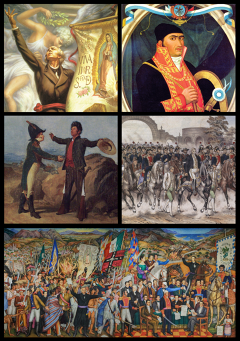
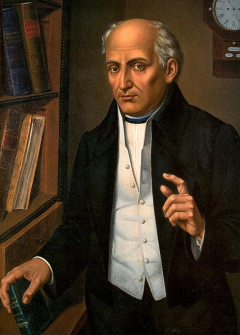
Father Miguel Hidalgo rang the church bell in the small town of Dolores before dawn on September 16, 1810, summoning his parishioners not for mass but for revolution. The speech he delivered that morning, known as the Grito de Dolores, called on the people of New Spain to rise against the Spanish colonial government and fight for their land, their liberty, and the Virgin of Guadalupe. The date became Mexico’s Independence Day, and Hidalgo’s cry is reenacted every year by the president from the balcony of the National Palace in Mexico City. Hidalgo was an unlikely revolutionary. A sixty-year-old Creole priest with a taste for French Enlightenment philosophy and a talent for winemaking, he had joined a conspiracy of disaffected Creole elites who resented their exclusion from power by peninsular-born Spaniards. The plotters had planned to launch their revolt in December, but the conspiracy was betrayed to colonial authorities in early September. Facing arrest, Hidalgo decided to act immediately. The movement he unleashed was far more radical and chaotic than the genteel political revolt the conspirators had envisioned. Hidalgo’s followers, drawn primarily from Indigenous and mestizo communities, swelled into an army of tens of thousands within weeks. They swept through the Bajio region, capturing Guanajuato in a bloody assault on the Alhondiga de Granaditas, a fortified granary where Spanish forces and Creole families had barricaded themselves. The massacre that followed alienated many of the Creole elite whose support the revolution needed. Hidalgo’s army marched to the outskirts of Mexico City but turned back without attacking, a decision that remains one of the great mysteries of Mexican history. Royalist forces regrouped, and by early 1811, Hidalgo was captured, defrocked by the Inquisition, and executed by firing squad. His head was displayed in an iron cage at the Alhondiga for ten years as a warning. Yet the movement he started could not be extinguished. Other leaders, notably Jose Maria Morelos and later Agustin de Iturbide, carried the fight forward until Mexico finally achieved independence in 1821. Hidalgo is remembered as the Father of Mexican Independence, and September 16 remains the country’s most celebrated national holiday.
September 16, 1810
216 years ago
Key Figures & Places
Spain
Wikipedia
Mexico
Wikipedia
Mexican War of Independence
Wikipedia
Miguel Hidalgo
Wikipedia
priest
Wikipedia
Grito de Dolores
Wikipedia
Grito de Dolores
Wikipedia
Miguel Hidalgo y Costilla
Wikipedia
Mexican War of Independence
Wikipedia
Fiestas Patrias (Mexico)
Wikipedia
Dolores Hidalgo
Wikipedia
Mexico
Wikipedia
History of Mexico
Wikipedia
Spain
Wikipedia
What Else Happened on September 16
Severus II had been handed the western Roman Empire by Galerius, but Maxentius — the son of the retired emperor Diocletian — refused to recognize him and raised…
The Sixth Ecumenical Council condemned Pope Honorius I for heresy, formally excommunicating him decades after his death. This rare rebuke shattered the doctrine…
Owain Glyndŵr accepted the title of Prince of Wales from his followers, igniting a fierce, decade-long rebellion against English rule. This uprising crippled th…
There were 102 passengers crammed onto the Mayflower, but the ship wasn't meant for them — it was a cargo vessel, roughly 100 feet long, still reeking of the wi…
His father died in exile, and he was thirteen years old. James Francis Edward Stuart inherited the Jacobite claim to the British throne on September 16, 1701, o…
Campo Maior was a small Portuguese frontier town of maybe 2,000 people. In 1732, lightning hit the town's armory during a storm. The resulting explosion didn't …
Talk to History
Have a conversation with historical figures who witnessed this era. Ask questions, explore perspectives, and bring history to life.