

Inchon Landing: MacArthur's Masterstroke Turns Korea
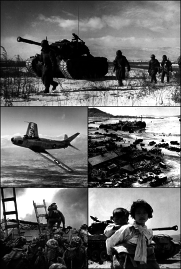
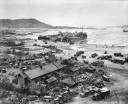
General Douglas MacArthur’s amphibious assault at Inchon on September 15, 1950, was the kind of gamble that military textbooks warn against and then study for decades. The landing site had 30-foot tidal variations, a narrow approach channel studded with mines, high seawalls instead of beaches, and a fortified island guarding the harbor entrance. Every member of the Joint Chiefs of Staff expressed reservations. MacArthur launched the attack anyway, and it worked so completely that it reversed the entire course of the Korean War in a matter of days. By September 1950, the war was going catastrophically for the United Nations forces. North Korean troops had driven the South Korean army and its American allies into a shrinking perimeter around the southeastern port of Pusan. The defensive line was holding, barely, but a breakout seemed impossible against an enemy that outnumbered the defenders and controlled nearly the entire peninsula. MacArthur argued that a landing deep behind enemy lines at Inchon, the port serving the South Korean capital of Seoul, would sever North Korean supply lines and force a general retreat. The Marines went ashore in three waves, beginning with the capture of Wolmi-do Island at dawn during the morning high tide. The main landing force hit the Inchon waterfront that evening, scaling the seawalls with ladders. Resistance was lighter than expected; the North Koreans had roughly 2,000 defenders at Inchon and had not anticipated an attack at such an unfavorable location. Within twenty-four hours, the Marines controlled the port and were advancing on Kimpo Airfield. Seoul was recaptured after heavy street fighting on September 28. The effect on the North Korean army at Pusan was devastating and immediate. Cut off from supplies and reinforcement, the invasion force disintegrated. UN troops broke out of the Pusan Perimeter and raced north, linking up with the Inchon landing force. Within two weeks, North Korean forces south of the 38th parallel had ceased to exist as a coherent fighting force. MacArthur’s triumph, however, bred the overconfidence that led him to push north toward the Chinese border, provoking China’s massive intervention in November and transforming a near-victory into three more years of grinding warfare.
September 15, 1950
76 years ago
Key Figures & Places




What Else Happened on September 15
The Nuremberg Laws weren't written in secret — they were announced at a Nazi Party rally, to cheering crowds, as a kind of legislative spectacle. Two laws. One …
An assassin struck Eastern Roman Emperor Constans II while he bathed in Syracuse, ending his life with a blow from a soap dish. His death triggered a chaotic po…
She'd raised her grandson to be a Christian duke and was grandmother to the future king Václav — later Saint Wenceslas. But her daughter-in-law Drahomíra saw Lu…
Fatimid forces crushed a Byzantine army near the Orontes River, halting the empire’s expansion into northern Syria. This defeat forced the Byzantines to abandon…
Before his arrest, Gilles de Rais was one of the wealthiest men in France and had fought alongside Joan of Arc at Orléans. He'd personally financed theatrical p…
A portrait of Saint Dominic appeared under mysterious circumstances in Soriano Calabro on September 15, 1530, generating a wave of local devotion that the Roman…
Talk to History
Have a conversation with historical figures who witnessed this era. Ask questions, explore perspectives, and bring history to life.