RAF Defeats Luftwaffe: Hitler's Invasion Plans Shattered
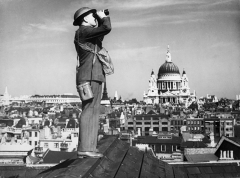
The Luftwaffe threw everything it had at London and southern England on September 15, 1940, sending wave after wave of bombers escorted by fighters in what Hermann Goering believed would be the knockout blow that broke the Royal Air Force. By nightfall, the RAF had shot down 56 German aircraft while losing 29 of its own, and Adolf Hitler’s plan to invade Britain effectively died in the skies over Kent and the Thames Estuary. The date is commemorated annually as Battle of Britain Day. The aerial campaign had been grinding on since July, when the Luftwaffe began attacking Channel convoys and coastal radar stations in preparation for Operation Sea Lion, the planned amphibious invasion of southern England. Through August, German bombers targeted RAF airfields, aircraft factories, and sector stations, coming dangerously close to crippling Fighter Command’s ability to defend the island. Then, on September 7, Goering shifted the bombing campaign to London, a strategic blunder that relieved pressure on the battered airfields and gave the RAF time to repair and regroup. On September 15, two massive German formations crossed the Channel. The first, around midday, comprised over 100 bombers with fighter escort heading for London. Air Vice-Marshal Keith Park, commanding 11 Group, scrambled every available squadron and called for reinforcements from 12 Group to the north. Spitfires and Hurricanes intercepted the bombers before they reached their targets, breaking up formations and forcing many to jettison their bombs over open countryside. A second wave in the afternoon met similarly fierce resistance. The losses stunned the German high command. Hitler had been told the RAF was down to its last few hundred fighters; the reality of determined resistance across a wide front contradicted every intelligence estimate. Two days later, on September 17, Hitler postponed Operation Sea Lion indefinitely. Britain would not be invaded. The survival of the RAF ensured that the United Kingdom remained a base from which the eventual liberation of Western Europe could be launched, making September 15, 1940, one of the most consequential days of the Second World War.
September 15, 1940
86 years ago
Key Figures & Places
What Else Happened on September 15
The Nuremberg Laws weren't written in secret — they were announced at a Nazi Party rally, to cheering crowds, as a kind of legislative spectacle. Two laws. One …
An assassin struck Eastern Roman Emperor Constans II while he bathed in Syracuse, ending his life with a blow from a soap dish. His death triggered a chaotic po…
She'd raised her grandson to be a Christian duke and was grandmother to the future king Václav — later Saint Wenceslas. But her daughter-in-law Drahomíra saw Lu…
Fatimid forces crushed a Byzantine army near the Orontes River, halting the empire’s expansion into northern Syria. This defeat forced the Byzantines to abandon…
Before his arrest, Gilles de Rais was one of the wealthiest men in France and had fought alongside Joan of Arc at Orléans. He'd personally financed theatrical p…
A portrait of Saint Dominic appeared under mysterious circumstances in Soriano Calabro on September 15, 1530, generating a wave of local devotion that the Roman…
Talk to History
Have a conversation with historical figures who witnessed this era. Ask questions, explore perspectives, and bring history to life.