

Szilard Envisions Chain Reaction: Nuclear Age Dawns
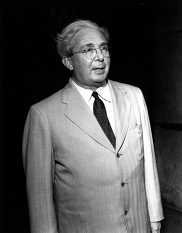
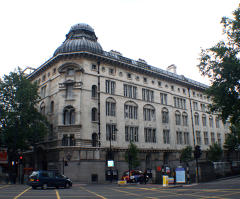
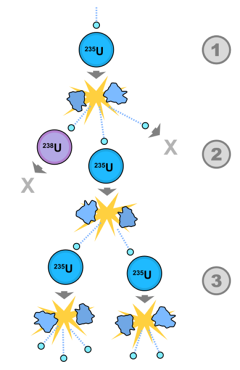
Leo Szilard was waiting for a traffic light to change at the corner of Southampton Row and Russell Square in London’s Bloomsbury district when the idea struck him. On September 12, 1933, the Hungarian physicist conceived of the nuclear chain reaction, the theoretical mechanism that would make both nuclear power and nuclear weapons possible. The light turned green, he crossed the street, and the atomic age began as a thought experiment on a London sidewalk. Szilard had been provoked by a newspaper account of a speech given the previous day by Ernest Rutherford, the towering figure of nuclear physics, who had publicly dismissed the possibility of extracting useful energy from atomic nuclei as "moonshine." Szilard, a former student of Einstein with an instinct for contrarian thinking, immediately began working through the problem. If a neutron could split an atom and that fission released additional neutrons, those neutrons could split more atoms, creating a self-sustaining cascade of energy release. The concept was purely theoretical in 1933. No one had yet identified an element that would sustain such a reaction. Szilard filed a patent on the chain reaction idea in 1934 and, remarkably, assigned it to the British Admiralty in secret, recognizing even then the military implications. He spent the next several years searching for suitable elements, testing beryllium and indium without success. The breakthrough came in January 1939, when Otto Hahn and Fritz Strassmann in Berlin demonstrated that uranium atoms could be split by neutron bombardment. Szilard immediately grasped the danger. He drafted the letter that Einstein signed and sent to President Roosevelt in August 1939, warning that Germany might develop an atomic bomb and urging the United States to begin its own research. That letter led to the Manhattan Project. Szilard worked at the University of Chicago, where Enrico Fermi achieved the first controlled chain reaction in December 1942. The man who conceived the idea at a traffic light spent the rest of his life campaigning against the weapon it produced.
September 12, 1933
93 years ago
Key Figures & Places


What Else Happened on September 12
Athenian and Plataean hoplites crushed the first Persian invasion force at the Bay of Marathon, proving that the mighty Achaemenid Empire was not invincible. Th…
Jin Xiaowudi was 10 years old when he inherited the Eastern Jin throne — a dynasty already reduced to ruling only southern China while the north fractured into …
Andronikos I Komnenos had seized the Byzantine throne through a coup, had the previous emperor — a child — strangled, and spent two years executing anyone he co…
Peter II of Aragon had 4,000 knights. Simon de Montfort had around 1,000. The math looked straightforward until Peter rode into battle with his identity deliber…
James I of Aragon was 21 years old when he landed at Santa Ponça with roughly 15,000 troops and 150 ships. Majorca had been under Moorish control for three cent…
King Denis of Portugal and King Ferdinand IV of Castile signed the Treaty of Alcañices on September 12, 1297, formalizing the border between their kingdoms with…
Talk to History
Have a conversation with historical figures who witnessed this era. Ask questions, explore perspectives, and bring history to life.