Stalin Purges Rivals: Moscow Show Trial of 17
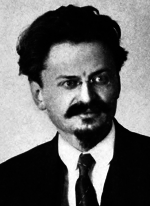
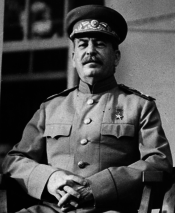
Seventeen of the Soviet Union''s most prominent Old Bolsheviks sat in the dock at the House of Trade Unions in Moscow, accused of conspiring with Leon Trotsky, Nazi Germany, and Imperial Japan to overthrow the Soviet state. The second Moscow Show Trial, which opened on January 23, 1937, was Joseph Stalin''s most elaborate piece of political theater—a spectacle designed to justify the elimination of everyone who might challenge his absolute power. The defendants included Karl Radek, a brilliant journalist and propagandist; Yuri Piatakov, deputy commissar of heavy industry; and Grigory Sokolnikov, a former finance commissar. All had been loyal Bolsheviks who had participated in the 1917 Revolution and served the Soviet government for decades. Under interrogation by the NKVD secret police, they had been broken through sleep deprivation, threats against their families, and physical torture, and they now delivered carefully rehearsed confessions to absurd crimes. The confessions were staggering in their implausibility. Piatakov claimed he had flown secretly to Oslo to meet Trotsky, a trip later disproven when Norwegian authorities confirmed no such flight had landed. Radek, who retained enough wit to occasionally veer from the script, told the court he was guilty of "not having been a genuine accomplice" but was found guilty nonetheless. Foreign journalists who attended the trial were divided—some believed the confessions, while others recognized the choreography of state terror. Thirteen of the seventeen defendants were sentenced to death and shot. Radek and Sokolnikov received prison sentences but were later killed in custody. The Trial of the Seventeen was the middle act of the Great Purge, which between 1936 and 1938 consumed an estimated 750,000 executions and millions of imprisonments. Stalin eliminated virtually the entire generation of revolutionaries who had built the Soviet Union alongside Lenin, replacing them with a terrified bureaucracy whose only qualification was unquestioning obedience.
January 23, 1937
89 years ago
Key Figures & Places
What Else Happened on January 23
Emperor Theodosius I elevated his nine-year-old son Honorius to the rank of co-emperor, formalizing the dynastic succession of the Theodosian line. This move sp…
Twelve crossbows. Seventy war elephants. And suddenly, battlefield tactics changed forever. The Song dynasty's archers didn't just fight—they revolutionized war…
Song Dynasty crossbowmen destroyed the Southern Han's war elephant corps at the Battle of Shao in 971, ending both the Southern Han state and the first regular …
A muddy riverbank. A papal decree. And suddenly, the heart of Finnish Christianity shifts just a few miles downstream. Pope Gregory IX's signature redrew the sp…
Louis IX didn't just judge — he dropped a legal hammer that would spark a bloody rebellion. The French king's "Mise of Amiens" was essentially a royal middle fi…
Zhu Yuanzhang ascended the throne as the Hongwu Emperor, ending decades of Mongol rule under the Yuan dynasty. By establishing the Ming dynasty, he centralized …
Talk to History
Have a conversation with historical figures who witnessed this era. Ask questions, explore perspectives, and bring history to life.