Smith Takes Command: Jamestown's Survival Secured
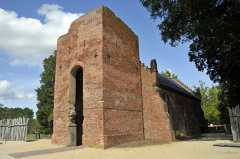
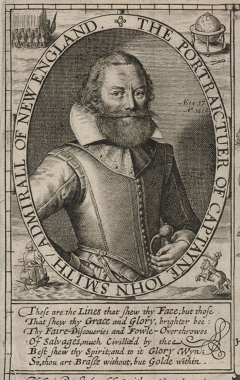
Captain John Smith was elected president of the Jamestown council on September 10, 1608, taking command of a colony that had nearly destroyed itself through starvation, disease, infighting, and a persistent refusal among many of the colonists to perform the manual labor necessary for survival. Smith, a 28-year-old soldier of fortune who had fought in wars across Europe and once been enslaved by the Ottoman Turks, imposed martial discipline on the settlement with a dictum that became the colony's unofficial motto: "He who does not work shall not eat." Jamestown had been founded in May 1607 by the Virginia Company of London as a commercial venture, and the 104 original settlers were a disastrous mix for frontier survival. Roughly half were classified as "gentlemen," men of social standing who considered physical labor beneath their dignity, and the remainder included goldsmiths, jewelers, and other tradesmen more suited to a European city than a malarial swamp on the James River. Within seven months, more than half the colonists were dead from disease, starvation, and occasional attacks by the Powhatan Confederacy. Smith had already proven himself the most capable leader in the colony before his election. He organized trading expeditions with the Powhatan to obtain corn, explored the Chesapeake Bay and its tributaries, and compiled the maps and accounts that would inform English understanding of the region for decades. His relationship with the Powhatan paramount chief Wahunsenacawh, and the famous if debated story of his rescue by the chief's daughter Pocahontas, remained central to the mythology of Jamestown, though Smith's own accounts of the episode grew more dramatic with each retelling. Smith's presidency lasted only a year before a gunpowder accident forced his return to England in October 1609. Without his leadership, the colony collapsed into the "Starving Time" of the winter of 1609-1610, when roughly 440 of 500 colonists died and survivors resorted to eating horses, rats, shoe leather, and in at least one confirmed case, the corpse of a deceased colonist. Jamestown survived, barely, and became the first permanent English settlement in North America, but its early years demonstrated that colonizing the New World required practical skill and ruthless discipline far more than aristocratic ambition.
September 10, 1608
418 years ago
Key Figures & Places
What Else Happened on September 10
Bishops across Visigothic Gaul gathered at the Council of Agde to codify forty-seven canons governing church discipline and clerical conduct. By standardizing r…
Pope Urban II opened the first synod at Melfi on September 10, 1089, gathering seventy bishops and twelve abbots to address clerical reform and relations with t…
John the Fearless earned his nickname at the Battle of Nicopolis in 1396, where his reckless cavalry charge contributed to a catastrophic crusader defeat. He su…
Constantinople in 1509 was still recovering from Ottoman conquest when the earth hit it with what survivors called 'The Lesser Judgment Day.' The earthquake — e…
Thomas Wolsey was the son of an Ipswich butcher who became the most powerful man in England after Henry VIII. His investiture as Cardinal in 1515 capped a rise …
English forces crushed the Scottish army at the Battle of Pinkie Cleugh, utilizing superior naval artillery and cavalry to secure a brutal victory. This rout fo…
Talk to History
Have a conversation with historical figures who witnessed this era. Ask questions, explore perspectives, and bring history to life.