Statute of Kalisz: Poland Protects Jewish Rights
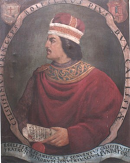
Duke Boleslaw the Pious of Greater Poland issued the Statute of Kalisz on September 8, 1264, granting the Jewish communities within his realm a comprehensive charter of rights and protections that made Poland the most hospitable country for Jews in medieval Europe. The statute guaranteed Jews freedom of worship, protection of their synagogues and cemeteries, the right to engage in commerce and moneylending, and jurisdiction of Jewish courts over internal disputes. Christians who attacked Jews, desecrated Jewish cemeteries, or kidnapped Jewish children faced severe penalties, including death in the most serious cases. The statute was modeled partly on similar charters issued by Duke Frederick II of Austria in 1244 and reflected the practical recognition that Jewish communities brought economic benefits that medieval rulers valued. Jews served as merchants, financiers, and skilled artisans in an era when the Catholic Church's prohibition on usury prevented Christians from engaging in many forms of lending. Boleslaw understood that attracting Jewish settlers would stimulate trade, increase tax revenue, and bring specialized skills to a region that was still developing its urban economy. The protections in the Statute of Kalisz were remarkably specific for their time. The document addressed blood libel accusations directly, requiring that any Christian accusing a Jew of using Christian blood must produce six witnesses, three Christian and three Jewish, or face punishment themselves. This provision specifically targeted one of the most dangerous and persistent forms of anti-Jewish violence in medieval Europe, where baseless accusations of ritual murder regularly sparked massacres. King Casimir III the Great extended the Statute of Kalisz to the entire Kingdom of Poland in 1334, and subsequent Polish monarchs confirmed and expanded its protections over the following centuries. These legal guarantees made Poland the primary destination for Jews fleeing persecution in Western Europe, particularly after the expulsions from England in 1290, France in 1306 and 1394, and the Spanish kingdoms in 1492. By the sixteenth century, Poland was home to roughly 80 percent of the world's Jewish population, a demographic reality rooted directly in the legal framework that Boleslaw established at Kalisz.
September 8, 1264
762 years ago
Key Figures & Places
What Else Happened on September 8
Roman legions under Titus breached the walls of Jerusalem, systematically dismantling the Second Temple and ending the Great Jewish Revolt. This destruction for…
Roman forces under Titus sacked Jerusalem on September 8, 70 AD, plundering the Temple treasury and burning the city after a months-long siege that starved the …
Li Yuan didn't want to rebel. His daughter Li Pingyang did. She raised her own army — reportedly 70,000 soldiers — while her father stalled, and her brother Li …
Antipope Theodoric's papacy lasted almost no time at all. Elected by a faction opposing the legitimate pope Paschal II in 1100, he held the title for only a few…
Philip of Swabia was crowned inside the Cathedral of Mainz by a single bishop in September 1198 — not in the traditional location, not with the traditional crow…
Pope Innocent IV canonized Stanisław of Szczepanów, the Bishop of Kraków who died at the hands of King Bolesław II. This formal recognition transformed a martyr…
Talk to History
Have a conversation with historical figures who witnessed this era. Ask questions, explore perspectives, and bring history to life.