

Last Thylacine Dies: A Species Lost Forever
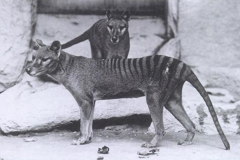
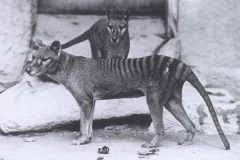
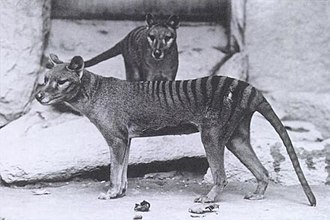
The last known thylacine, a striped marsupial carnivore commonly called the Tasmanian tiger, died alone in its enclosure at the Hobart Zoo in Tasmania on the night of September 7, 1936. The animal, sometimes called Benjamin though this name was applied only decades later and its actual sex is debated, was reportedly locked out of its sheltered sleeping quarters and died from exposure during an unusually cold night. No keeper noted the death at the time, and the species passed into extinction with minimal ceremony. The thylacine was the largest marsupial carnivore to survive into the modern era, a wolf-sized predator with distinctive dark stripes across its back and a rigid tail. Despite its superficial resemblance to a dog, it was more closely related to kangaroos and wombats, a striking example of convergent evolution in which unrelated species develop similar body forms in response to similar ecological pressures. The thylacine had once ranged across mainland Australia and New Guinea but had been extinct on the mainland for at least 2,000 years before European settlement of Tasmania. European colonists in Tasmania declared the thylacine a threat to their sheep flocks and placed government bounties on its head beginning in the 1830s. The Van Diemen's Land Company paid bounties for 2,184 thylacine scalps between 1888 and 1909 alone. Hunting pressure combined with habitat destruction, competition from introduced dogs, and a distemper-like disease devastated the population. By the 1920s, sightings had become rare, and the species was clearly approaching extinction. The Tasmanian government granted the thylacine protected status on July 10, 1936, just 59 days before the last known individual died. Short film footage shot at the Hobart Zoo in 1933 remains the only motion picture of a living thylacine, showing the animal pacing in its cage and opening its jaws to an extraordinary 80-degree gape. The thylacine has become a global symbol of human-caused extinction, and ongoing efforts to recover DNA from preserved specimens fuel discussions about the ethics and feasibility of de-extinction technology.
September 7, 1936
90 years ago
Key Figures & Places




What Else Happened on September 7
Roman legions under General Titus breached the walls of Jerusalem, systematically dismantling the Second Temple and ending the Great Jewish Revolt. This destruc…
Louis got the nickname 'the Stammerer' from his contemporaries — and it wasn't metaphorical. He had a pronounced stammer and was reportedly in poor health his e…
The papal election of 1159 produced two claimants simultaneously. The majority of cardinals chose Orlando Bandinelli, who became Alexander III. A minority backe…
Cardinal Rolando Bandinelli's election as Pope Alexander III triggered an immediate split when rivals crowned Cardinal Octaviano Monticelli as Antipope Victor I…
Richard the Lionheart shattered Saladin’s tactical reputation at Arsuf, proving that the Ayyubid army could be defeated in open field combat. By maintaining a d…
Frederick II arrived in the Holy Land already excommunicated by the Pope — the Church had banned him for repeatedly delaying this very trip. So he launched a Cr…
Talk to History
Have a conversation with historical figures who witnessed this era. Ask questions, explore perspectives, and bring history to life.