

Brazil Declares Independence: Pedro Defies Portugal
Prince Pedro of Portugal stood on the banks of the Ipiranga River near Sao Paulo on September 7, 1822, read a letter from Lisbon demanding his immediate return to Portugal, drew his sword, and declared, "Independence or death!" The cry, known as the Grito do Ipiranga, severed Brazil from Portuguese colonial rule and established the largest nation in South America as an independent empire with Pedro as its first emperor. Unlike the violent revolutions convulsing Spanish America, Brazil's independence came relatively peacefully, without the prolonged wars that devastated its neighbors. The roots of Brazilian independence lay in Napoleon's invasion of Portugal in 1807, which forced the entire Portuguese royal family to flee to Rio de Janeiro. For 13 years, Brazil served as the seat of the Portuguese empire, a unique reversal in colonial history. King Joao VI returned to Lisbon in 1821 under pressure from liberal revolutionaries, but left his son Pedro behind as regent of Brazil. The Portuguese parliament, the Cortes, then attempted to strip Brazil of the autonomous status it had enjoyed and reduce it back to a subordinate colony, demanding Pedro's return. Brazilian elites, having experienced the benefits of hosting the royal court and direct trade with foreign nations, had no desire to return to colonial dependency. Pedro, influenced by his wife Leopoldina of Austria and his chief adviser Jose Bonifacio de Andrada, chose to side with the Brazilians. Leopoldina reportedly wrote to Pedro urging him to act before the Cortes could reassert control, and it was her letter, along with dispatches from Lisbon, that Pedro received on the banks of the Ipiranga. Pedro I was crowned Emperor of Brazil on December 1, 1822, establishing a constitutional monarchy that would endure until 1889. Portugal recognized Brazilian independence in 1825, partly because Britain, which needed Brazilian trade, pressured Lisbon to accept the new reality. Brazil's path to independence, led by a Portuguese prince rather than against one, produced a remarkably stable transition that avoided the decades of civil war and political fragmentation that plagued most of post-colonial Latin America.
September 7, 1822
204 years ago
Key Figures & Places
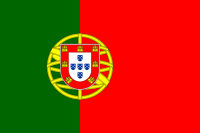
Portugal
Wikipedia
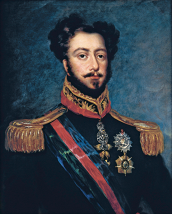
Pedro I of Brazil
Wikipedia
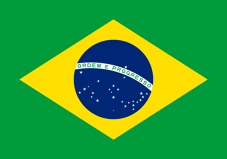
Brazil
Wikipedia
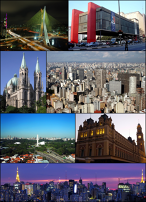
Sao Paulo
Wikipedia

Pedro I of Brazil
Wikipedia

Independence of Brazil
Wikipedia

Ipiranga Brook
Wikipedia

São Paulo
Wikipedia

Brazil
Wikipedia

Reino Unido de Portugal, Brasil y los Algarbes
Wikipedia

Independence Day (Brazil)
Wikipedia
Parque da Independência
Wikipedia

Museu Paulista
Wikipedia

Museo
Wikipedia

Ciudad
Wikipedia

Portuguese Empire
Wikipedia

Jogos Paralímpicos de Verão de 2016
Wikipedia

Rio de Janeiro
Wikipedia

Portugal
Wikipedia
What Else Happened on September 7
Roman legions under General Titus breached the walls of Jerusalem, systematically dismantling the Second Temple and ending the Great Jewish Revolt. This destruc…
Louis got the nickname 'the Stammerer' from his contemporaries — and it wasn't metaphorical. He had a pronounced stammer and was reportedly in poor health his e…
The papal election of 1159 produced two claimants simultaneously. The majority of cardinals chose Orlando Bandinelli, who became Alexander III. A minority backe…
Cardinal Rolando Bandinelli's election as Pope Alexander III triggered an immediate split when rivals crowned Cardinal Octaviano Monticelli as Antipope Victor I…
Richard the Lionheart shattered Saladin’s tactical reputation at Arsuf, proving that the Ayyubid army could be defeated in open field combat. By maintaining a d…
Frederick II arrived in the Holy Land already excommunicated by the Pope — the Church had banned him for repeatedly delaying this very trip. So he launched a Cr…
Talk to History
Have a conversation with historical figures who witnessed this era. Ask questions, explore perspectives, and bring history to life.