

Crazy Horse Killed: Sioux Chief Dies in Custody
Crazy Horse, the Oglala Lakota war chief who had led the charge that destroyed George Armstrong Custer at the Little Bighorn, was bayoneted by a soldier at Fort Robinson, Nebraska, on September 5, 1877, dying from the wound within hours. The exact circumstances of his killing remain disputed, but the most widely accepted account holds that Crazy Horse resisted when he realized he was being led to a guardhouse rather than a meeting, and Private William Gentles drove his bayonet into the chief's lower back during the struggle. Crazy Horse was 35 years old. Crazy Horse had surrendered at Fort Robinson just five months earlier, bringing in roughly 900 followers after a brutal winter of pursuit by the U.S. Army. His surrender effectively ended the Great Sioux War of 1876, the conflict triggered by the Black Hills Gold Rush and the government's violation of the 1868 Fort Laramie Treaty. At the Little Bighorn on June 25, 1876, Crazy Horse and Sitting Bull led the combined Lakota, Northern Cheyenne, and Arapaho forces that killed Custer and over 260 soldiers of the 7th Cavalry, the worst defeat the U.S. Army suffered in the Indian Wars. The Army's suspicion of Crazy Horse deepened after his surrender. His prestige among the Lakota was enormous, and military commanders feared he would break away and resume fighting. Rival chiefs, including Red Cloud and Spotted Tail, reportedly fed false intelligence to the Army suggesting that Crazy Horse was planning an escape. When General George Crook summoned Crazy Horse to Fort Robinson for a meeting, the chief came willingly but was led toward the guardhouse. Upon seeing the barred cells, Crazy Horse drew a knife and struggled with the soldiers holding him. Little Big Man, a former ally, grabbed his arms, and Gentles struck with the bayonet. No photograph of Crazy Horse is known to exist. He reportedly refused to be photographed, believing the process captured a piece of the soul. His father took his body to an undisclosed location in the Dakota Territory, and the burial site has never been confirmed. The memorial being carved into Thunderhead Mountain in the Black Hills, begun in 1948 and still unfinished, honors a man whose resistance to American expansion made him a symbol of Indigenous defiance.
September 5, 1877
149 years ago
Key Figures & Places
United States
Wikipedia
Nebraska
Wikipedia
Indian Wars
Wikipedia
bayonet
Wikipedia
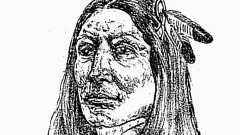
Crazy Horse
Wikipedia
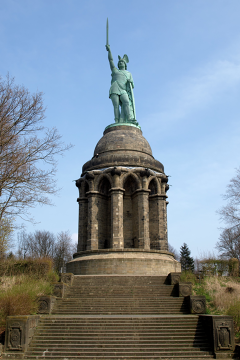
tribal chief
Wikipedia
Oglala Lakota
Wikipedia
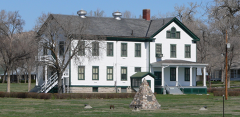
Fort Robinson
Wikipedia
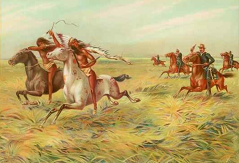
American Indian Wars
Wikipedia

American Indian Wars
Wikipedia

Oglala
Wikipedia

Tribal chief
Wikipedia

Crazy Horse
Wikipedia

Bayonet
Wikipedia

Fort Robinson
Wikipedia

Nebraska
Wikipedia
What Else Happened on September 5
Liu Yan declared himself emperor in Panyu, formally establishing the Southern Han state. By asserting imperial authority over the Lingnan region, he secured con…
Swa Saw Ke inherited the kingdom of Ava in central Burma in 1367 and spent the next 33 years doing something unusual for a medieval Southeast Asian monarch: he …
Alexander Farnese maneuvered his Spanish forces to break the siege of Paris, compelling Henry IV to withdraw his troops. This tactical victory preserved the Cat…
Nicolas Fouquet had thrown a party for the King — a housewarming at his château at Vaux-le-Vicomte, so lavish it reportedly made Louis XIV silently furious that…
The Great Fire burned for four days and nights through 13,200 houses and 87 churches, leaving 100,000 people homeless in the ruins of medieval London. The offic…
Pierre Le Moyne d'Iberville fought his way into Hudson Bay through waters most European commanders refused to enter. In 1697 his single ship, the Pélican, engag…
Talk to History
Have a conversation with historical figures who witnessed this era. Ask questions, explore perspectives, and bring history to life.