TV Links Coast to Coast: First Transcontinental Broadcast
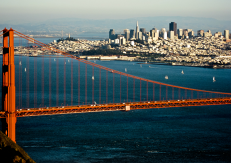
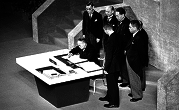
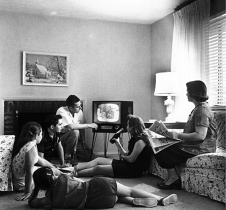
President Harry Truman appeared on television screens simultaneously in New York and San Francisco on September 4, 1951, addressing the Japanese Peace Treaty Conference in the first live transcontinental television broadcast in American history. AT&T's new microwave relay system, a chain of 107 towers stretching 2,855 miles across the continent, carried the signal from the War Memorial Opera House in San Francisco to viewers on the East Coast in real time. The technical achievement collapsed the nation's geography, making it possible for Americans on both coasts to witness the same event as it happened. Television before September 4, 1951, was essentially a regional medium. Networks recorded programs on kinescope, a process that filmed a television monitor, and shipped the grainy copies to stations in other cities for delayed broadcast. Live programming reached only as far as the coaxial cables that connected stations within the same region. The transcontinental link required AT&T to build a network of microwave towers, each within line of sight of the next, that could relay video signals across mountains, deserts, and plains at the speed of light. The broadcast of the Japanese Peace Treaty Conference was chosen partly for its diplomatic significance. The treaty, which formally ended the state of war between Japan and 48 Allied nations, restored Japanese sovereignty and marked the country's reentry into the international community six years after its devastating defeat. The ceremony was a momentous diplomatic event that the new coast-to-coast link made accessible to millions of viewers simultaneously. The transcontinental broadcast transformed television from a local curiosity into a national medium virtually overnight. Within weeks, entertainment programming followed the news, and the three networks began building the national broadcast infrastructure that would dominate American culture for the next four decades. The ability to share live experiences across 3,000 miles changed how Americans consumed news, sports, politics, and entertainment, binding a continent-spanning nation together through a shared screen.
September 4, 1951
75 years ago
Key Figures & Places
What Else Happened on September 4
Romulus Augustulus was 16 years old when he was deposed. His name was almost cosmically ironic — Romulus, the city's legendary founder, combined with Augustulus…
Li Shimin had just arranged the killing of two of his own brothers to take the throne. The Xuanwu Gate Incident — a carefully planned ambush inside the palace —…
Saxon forces routed the combined Slavic armies of the Redarii and Obotrites at Lenzen in 929, killing thousands and capturing the fortified stronghold in Brande…
Sienese Ghibellines, reinforced by King Manfred's German cavalry, annihilated a much larger Florentine Guelph army at Montaperti, leaving thousands dead along t…
Peter III of Aragon didn't just become King of Sicily — he walked into a power vacuum created by one of the most dramatic popular uprisings of the medieval peri…
Castile and Portugal signed the Treaty of Alcáçovas, ending a succession war and dividing the Atlantic world between two Iberian powers. Portugal secured exclus…
Talk to History
Have a conversation with historical figures who witnessed this era. Ask questions, explore perspectives, and bring history to life.