Geronimo Surrenders: Apache Resistance Ends
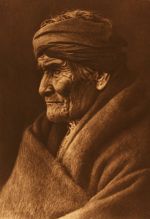
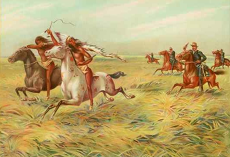
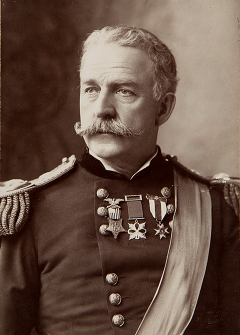
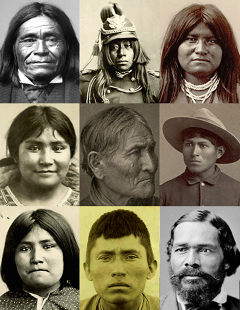
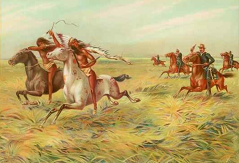
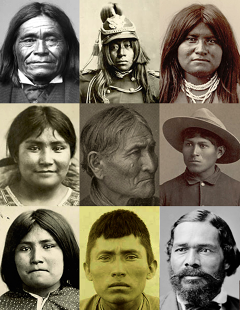
Geronimo, the Apache war leader whose name had become synonymous with resistance across the American Southwest, surrendered to General Nelson Miles in Skeleton Canyon, Arizona, on September 4, 1886, ending nearly three decades of Apache warfare against Mexico and the United States. The surrender came after a grueling pursuit in which 5,000 U.S. Army troops, roughly one-quarter of the entire standing army, had chased Geronimo and a band of just 38 Apaches, including women and children, through the mountains of the Sierra Madre. Geronimo was not a chief but a medicine man and war leader of the Chiricahua Apache whose family had been murdered by Mexican soldiers in 1851. That massacre transformed him into a relentless warrior who conducted raids on both sides of the border for over three decades. He had surrendered and been confined to reservations multiple times, only to break out again when conditions became intolerable. His final breakout from the San Carlos Reservation in May 1885 with 35 warriors and 109 women and children triggered the largest military operation against Native Americans in the Indian Wars. Miles, who replaced General George Crook after Crook's resignation over disagreements about Apache policy, employed Apache scouts and a system of heliograph communication across mountain peaks to track Geronimo through the most forbidding terrain in North America. Lieutenant Charles Gatewood, who had earned Geronimo's respect, entered the Apache camp alone and persuaded the leader to negotiate. Miles promised Geronimo that his people would be reunited with their families and eventually given a reservation in the Southwest. Neither promise was kept. Geronimo and the Chiricahua Apache, including the scouts who had helped capture him, were shipped as prisoners of war to Florida, then Alabama, and finally Fort Sill, Oklahoma. Geronimo spent the remaining 23 years of his life as a prisoner, becoming a celebrity who appeared at the 1904 World's Fair and rode in Theodore Roosevelt's inaugural parade, yet was never permitted to return home. He died of pneumonia at Fort Sill in 1909, still a prisoner of war.
September 4, 1886
140 years ago
Key Figures & Places

What Else Happened on September 4
Romulus Augustulus was 16 years old when he was deposed. His name was almost cosmically ironic — Romulus, the city's legendary founder, combined with Augustulus…
Li Shimin had just arranged the killing of two of his own brothers to take the throne. The Xuanwu Gate Incident — a carefully planned ambush inside the palace —…
Saxon forces routed the combined Slavic armies of the Redarii and Obotrites at Lenzen in 929, killing thousands and capturing the fortified stronghold in Brande…
Sienese Ghibellines, reinforced by King Manfred's German cavalry, annihilated a much larger Florentine Guelph army at Montaperti, leaving thousands dead along t…
Peter III of Aragon didn't just become King of Sicily — he walked into a power vacuum created by one of the most dramatic popular uprisings of the medieval peri…
Castile and Portugal signed the Treaty of Alcáçovas, ending a succession war and dividing the Atlantic world between two Iberian powers. Portugal secured exclus…
Talk to History
Have a conversation with historical figures who witnessed this era. Ask questions, explore perspectives, and bring history to life.