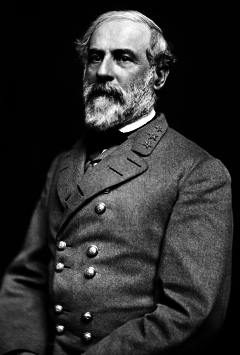
Lee Crosses Potomac: Confederate Army Invades the North
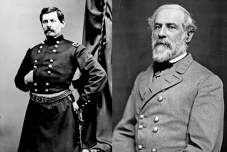
General Robert E. Lee marched the Army of Northern Virginia across the Potomac River into Maryland on September 4, 1862, carrying the American Civil War into Union territory for the first time. Fresh from his crushing victory over General John Pope at the Second Battle of Bull Run, Lee believed that a successful invasion of the North could win diplomatic recognition from Britain and France, encourage the Northern peace movement, and perhaps end the war before winter. His army of roughly 55,000 men, many of them barefoot and subsisting on green corn and apples, forded the river near Leesburg and advanced toward Frederick, Maryland. The decision to invade was a calculated gamble driven by strategic necessity as much as ambition. Lee's army could not sustain itself in war-ravaged northern Virginia, where both armies had stripped the countryside bare. Moving into Maryland placed his forces on Union soil, where they could forage from untouched farms, and threatened Washington, Baltimore, and even Philadelphia. Lee also hoped that the presence of a Confederate army in a border state would encourage Maryland's substantial pro-Southern population to rally to the Confederate cause. Lee's invasion plan, Special Order 191, divided his army into multiple columns to capture the Union garrison at Harpers Ferry and secure his supply line through the Shenandoah Valley. A copy of the order was famously lost by a Confederate staff officer, wrapped around three cigars, and found by Union soldiers in a field near Frederick. General George McClellan, commanding the Army of the Potomac, received the captured orders and for once moved with uncharacteristic speed to intercept Lee's scattered forces. The campaign culminated on September 17 at the Battle of Antietam near Sharpsburg, Maryland, the bloodiest single day in American history, with roughly 23,000 casualties on both sides. Lee was forced to retreat back across the Potomac, and the failed invasion gave Abraham Lincoln the victory he needed to issue the Emancipation Proclamation, transforming the war from a fight to preserve the Union into a war to end slavery.
September 4, 1862
164 years ago
Key Figures & Places
What Else Happened on September 4
Romulus Augustulus was 16 years old when he was deposed. His name was almost cosmically ironic — Romulus, the city's legendary founder, combined with Augustulus…
Li Shimin had just arranged the killing of two of his own brothers to take the throne. The Xuanwu Gate Incident — a carefully planned ambush inside the palace —…
Saxon forces routed the combined Slavic armies of the Redarii and Obotrites at Lenzen in 929, killing thousands and capturing the fortified stronghold in Brande…
Sienese Ghibellines, reinforced by King Manfred's German cavalry, annihilated a much larger Florentine Guelph army at Montaperti, leaving thousands dead along t…
Peter III of Aragon didn't just become King of Sicily — he walked into a power vacuum created by one of the most dramatic popular uprisings of the medieval peri…
Castile and Portugal signed the Treaty of Alcáçovas, ending a succession war and dividing the Atlantic world between two Iberian powers. Portugal secured exclus…
Talk to History
Have a conversation with historical figures who witnessed this era. Ask questions, explore perspectives, and bring history to life.