Roosevelt's Big Stick: American Power Declared
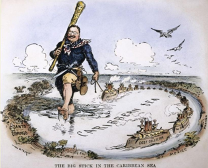
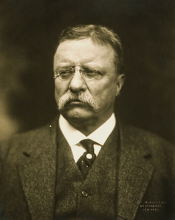
Theodore Roosevelt delivered a speech at the Minnesota State Fair on September 2, 1901, quoting a West African proverb that would define American foreign policy for a generation: "Speak softly and carry a big stick; you will go far." The Vice President was outlining his vision for the nation's role on the world stage to a crowd of fairgoers, arguing that the United States should pursue diplomacy first but maintain military strength sufficient to back its words with force. Twelve days later, President William McKinley was shot by an anarchist, and Roosevelt became the youngest president in American history at age 42. Roosevelt had already lived one of the most remarkable lives in American public service. A sickly, asthmatic child from a wealthy New York family, he had transformed himself through sheer will into a rancher, police commissioner, naval strategist, and the hero of San Juan Hill during the Spanish-American War. His charge up Kettle Hill with the Rough Riders made him a national celebrity, and the Republican machine placed him on the 1900 ticket partly to keep the energetic reformer occupied in the largely ceremonial role of Vice President. The "Big Stick" philosophy manifested in concrete action almost immediately upon Roosevelt's ascension to the presidency. He negotiated the construction of the Panama Canal, brokering Panama's independence from Colombia when the Colombians refused favorable terms. He dispatched the Great White Fleet on a worldwide tour to demonstrate American naval power. He mediated the end of the Russo-Japanese War, becoming the first American to win the Nobel Peace Prize, while simultaneously overseeing the largest peacetime military buildup the nation had ever undertaken. Roosevelt's speech at the Minnesota State Fair captured a turning point in American identity. The United States in 1901 was emerging from a century of continental expansion and beginning to project power globally, and Roosevelt's pithy formulation gave that transformation both a slogan and a doctrine. The phrase entered the language permanently, invoked by presidents and policymakers ever since when American diplomacy meets the need for credible force.
September 2, 1901
125 years ago
Key Figures & Places
What Else Happened on September 2
Cicero was 62 years old, semi-retired, and knew exactly how dangerous this was. Mark Antony controlled Rome's legions. Cicero controlled words. His first Philip…
Cleopatra VII elevated her young son, Caesarion, to the Egyptian throne as co-ruler, cementing a political alliance with Julius Caesar. By positioning the boy a…
Cleopatra's gilded warship turned and fled through the battle line at Actium on September 2, 31 BC, and Mark Antony abandoned his fleet to chase after her, hand…
Galla Placidia had already been captured by Visigoths, married their king, widowed, ransomed back to Rome, and forced into a second marriage by her own brother …
Richard had spent three years fighting for Jerusalem and never took it. The Treaty of Jaffa was his admission that he couldn't — but he negotiated hard. Saladin…
Mary had been Queen of France, then widowed at 18, then forced to return to a Scotland she barely remembered. When she rode into Edinburgh in August 1561, Prote…
Talk to History
Have a conversation with historical figures who witnessed this era. Ask questions, explore perspectives, and bring history to life.