Fischer Defies Russia: The Match of the Century
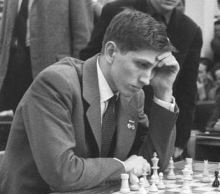
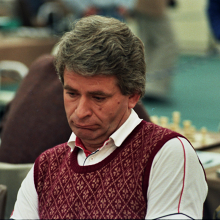
Bobby Fischer grabbed Boris Spassky's king and tipped it over, ending not just a chess match but the Soviet Union's quarter-century stranglehold on the world championship. The 29-year-old American had won Game 21 of their match in Reykjavik, Iceland, clinching the title with a score of 12.5 to 8.5 on September 1, 1972. Spassky, representing a nation that had produced every world champion since 1948 and treated chess supremacy as proof of Soviet intellectual superiority, rose from the table and applauded his opponent. The path to Reykjavik was almost as dramatic as the match itself. Fischer nearly forfeited before playing a single move, demanding more prize money and objecting to the playing conditions. He lost Game 1 on a bizarre blunder and forfeited Game 2 entirely when organizers refused to move the match to a back room away from cameras. Down 0-2, most players would have collapsed. Fischer won Game 3 and then reeled off a stretch of dominant chess that left Spassky visibly shaken, taking a 6.5-3.5 lead that the Soviet champion never recovered from. The match consumed global attention in ways no chess competition had before or has since. Cold War tensions transformed a board game into a proxy battle between American individualism and Soviet state machinery. Fischer had prepared with almost monastic intensity, memorizing Spassky's games going back decades and developing new opening ideas that caught the champion off guard. Spassky, backed by a team of Soviet seconds and grandmasters, found himself outprepared by a single, brilliantly erratic American. Fischer never defended his title. He forfeited the championship to Anatoly Karpov in 1975 rather than accept the match conditions, then essentially vanished from competitive chess for two decades. His 1972 victory remains the most culturally significant chess match ever played, a moment when 64 squares became a battlefield in the struggle between superpowers.
September 1, 1972
54 years ago
Key Figures & Places

What Else Happened on September 1
Marcus Furius Camillus dedicated the Temple of Juno Regina on the Aventine Hill, fulfilling a vow made during the grueling siege of Veii. By transplanting the g…
Nobody actually celebrated it in 462 AD. The Byzantine indiction was a 15-year Roman tax assessment cycle — a bureaucratic rhythm that somehow became embedded i…
Greek fire did what no sword could. The Byzantine navy pumped it through bronze tubes mounted on ships, igniting the Muslim armada — 1,800 vessels — as it pushe…
The main altar of Lund Cathedral was consecrated on September 1, 1145, cementing the church's role as the spiritual center of all Nordic Christianity. As seat o…
The widow Stamira threw herself from the walls of Ancona during Emperor Frederick Barbarossa's siege in 1173, choosing death over surrender in an act that repor…
Stephen V of Hungary personally documented a walk to a crumbling old castle where workers had just unearthed a sword. Not just any sword — the Sword of Attila, …
Talk to History
Have a conversation with historical figures who witnessed this era. Ask questions, explore perspectives, and bring history to life.