Gaddafi Seizes Libya: A Revolution Begins
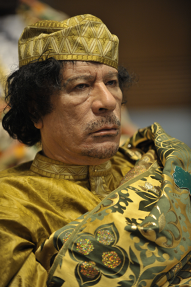
A 27-year-old army captain named Muammar al-Gaddafi and a small cadre of junior military officers seized control of Libya on September 1, 1969, overthrowing King Idris while the aging monarch was receiving medical treatment in Turkey. The nearly bloodless coup encountered so little resistance that the plotters controlled Tripoli and Benghazi within hours, capturing key government buildings and military installations without a single combat fatality. By dawn, Gaddafi's Free Officers Movement controlled the country, and the king's era was finished. Idris had ruled Libya since independence in 1951, presiding over a poor, largely tribal nation that was transformed by the discovery of massive oil reserves in 1959. But the wealth concentrated around the royal court and foreign oil companies, fueling resentment among young Libyans inspired by Egyptian president Gamal Abdel Nasser's brand of pan-Arab nationalism. Gaddafi, a devout admirer of Nasser, had been planning the coup since his days at the Royal Military Academy in Benghazi, carefully recruiting loyal officers while keeping the conspiracy tight enough to avoid detection. The new regime abolished the monarchy, expelled the remaining Italian colonists and American and British military personnel, and nationalized portions of the oil industry. Gaddafi proclaimed the Libyan Arab Republic and positioned himself as a revolutionary leader on the world stage, funding liberation movements, alleged terrorist organizations, and anti-Western causes across three continents. His "Third Universal Theory," outlined in his Green Book, proposed an alternative to both capitalism and communism. Gaddafi would rule Libya for 42 years, making him one of the longest-serving non-royal leaders in history. His regime ended in 2011 when a NATO-backed uprising captured and killed him, leaving Libya fractured along the same tribal and regional lines that existed before his coup.
September 1, 1969
57 years ago
Key Figures & Places
What Else Happened on September 1
Marcus Furius Camillus dedicated the Temple of Juno Regina on the Aventine Hill, fulfilling a vow made during the grueling siege of Veii. By transplanting the g…
Nobody actually celebrated it in 462 AD. The Byzantine indiction was a 15-year Roman tax assessment cycle — a bureaucratic rhythm that somehow became embedded i…
Greek fire did what no sword could. The Byzantine navy pumped it through bronze tubes mounted on ships, igniting the Muslim armada — 1,800 vessels — as it pushe…
The main altar of Lund Cathedral was consecrated on September 1, 1145, cementing the church's role as the spiritual center of all Nordic Christianity. As seat o…
The widow Stamira threw herself from the walls of Ancona during Emperor Frederick Barbarossa's siege in 1173, choosing death over surrender in an act that repor…
Stephen V of Hungary personally documented a walk to a crumbling old castle where workers had just unearthed a sword. Not just any sword — the Sword of Attila, …
Talk to History
Have a conversation with historical figures who witnessed this era. Ask questions, explore perspectives, and bring history to life.