Princess Diana Dies: Paris Car Crash Shocks the World
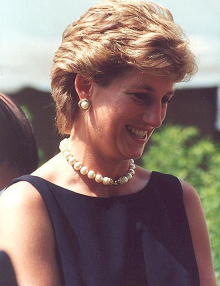
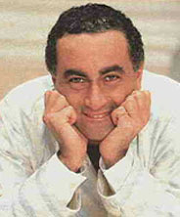
A black Mercedes carrying Princess Diana and Dodi Fayed entered the Pont de l'Alma tunnel in Paris at high speed shortly after midnight on August 31, 1997, pursued by paparazzi on motorcycles. The car struck a concrete pillar at an estimated 65 miles per hour. Fayed and driver Henri Paul were killed instantly. Diana, who was not wearing a seatbelt, sustained massive chest injuries. She was pronounced dead at Pitie-Salpetriere Hospital at 4:00 AM. She was 36 years old. Diana had become the most photographed woman in the world from the moment her engagement to Prince Charles was announced in 1981. Their wedding at St. Paul's Cathedral drew a global television audience of 750 million. The marriage deteriorated publicly through the late 1980s and early 1990s, with both parties conducting extramarital affairs and giving explosive media interviews. Their divorce was finalized in 1996. Diana retained her title of Princess of Wales and threw herself into humanitarian work, most notably her campaign against landmines, which drew international attention when she walked through an active minefield in Angola wearing a protective visor. The Paris crash occurred during a late-night departure from the Ritz Hotel, owned by Fayed's father Mohamed Al-Fayed. Henri Paul, the hotel's deputy head of security, was driving despite having a blood alcohol level more than three times the French legal limit. He was also traveling at roughly twice the tunnel's speed limit while attempting to evade pursuing photographers. An official French investigation and a subsequent British inquest both concluded that the crash was caused by Paul's drunk driving and reckless speed, with the pursuing paparazzi contributing to the dangerous conditions. Diana's death triggered an unprecedented outpouring of public grief. Over a million people lined the funeral route in London on September 6. An estimated 2.5 billion people watched the televised service at Westminster Abbey, where Elton John performed a rewritten version of "Candle in the Wind." The mourning exposed a rift between public sentiment and the royal family, which was criticized for its initially restrained response. Queen Elizabeth II eventually addressed the nation on live television, an extraordinary concession. Diana's death permanently altered the British monarchy's relationship with the media and the public, forcing an institution built on reserve to learn the language of emotional openness.
August 31, 1997
29 years ago
Key Figures & Places
What Else Happened on August 31
Empress Theodora had ruled the Byzantine Empire since 1042, holding the throne first with her sister Zoe and then alone. She was 76. She'd been pulled from a co…
The Haudenosaunee Confederacy — the Iroquois League — bound five nations together under a constitution called the Great Law of Peace. The exact date is disputed…
Al-Kamil ascended to the Ayyubid sultanate, inheriting a realm under siege by the Fifth Crusade. By prioritizing diplomacy over total war, he successfully negot…
Al-Kamil became Sultan of the Ayyubid Empire upon his father Al-Adil's death in 1218, inheriting control of Egypt, Syria, and northern Mesopotamia at a moment w…
King Håkon V Magnusson shifted the Norwegian capital from Bergen to Oslo, consolidating his power in the eastern territories. This move permanently altered the …
A massive earthquake estimated between 8.8 and 9.4 magnitude struck Chile's Atacama Region around 1420, generating a trans-Pacific tsunami that reached the coas…
Talk to History
Have a conversation with historical figures who witnessed this era. Ask questions, explore perspectives, and bring history to life.