

Bloody Sunday in St. Petersburg: The Revolution of 1905 Begins
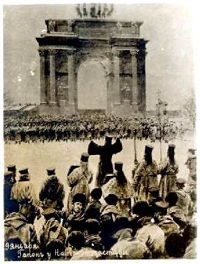
Tsarist troops fired on a peaceful procession of workers marching to the Winter Palace, shattering any remaining faith in the monarchy's benevolence. This massacre ignited the 1905 Russian Revolution, compelling Nicholas II to issue the October Manifesto and establish the first elected legislature, the Duma.
January 22, 1905
121 years ago
Key Figures & Places


What Else Happened on January 22
Emperor Justinian I forced Patriarch Eutychius into exile, replacing him with the more compliant John Scholasticus. This power play solidified imperial control …
Twelve months old and already wearing imperial purple. Constantine was less a ruler and more a political chess piece, hoisted onto the Byzantine throne by his f…
The Vikings didn't just win. They crushed the West Saxons so thoroughly that King Æthelred would bleed out from his battle wounds shortly after. Basing was more…
el rey Pedro II de Aragón acepta el vasallaje del caballero Simón IV de Montfort sobre diferentes territorios de Occitania.
Innozenz V. wird als Papst inthronisiert.
Die etwa 400 Mitglieder umfassende jüdische Gemeinde in Speyer wird durch ein Pogrom bei den Judenverfolgungen zur Zeit des Schwarzen Todes vernichtet.
Talk to History
Have a conversation with historical figures who witnessed this era. Ask questions, explore perspectives, and bring history to life.