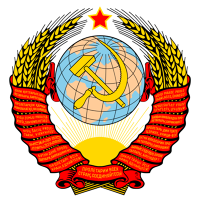
Soviet Communist Party Suspended: USSR Crumbles
The Supreme Soviet of the Soviet Union voted to suspend all activities of the Communist Party on August 29, 1991, a week after a bungled coup attempt by hardliners had accelerated the very collapse they were trying to prevent. The party that had ruled the world's largest country for 74 years, commanded the world's largest military, and shaped the ideological landscape of the twentieth century was shut down in a single afternoon legislative session. The suspension followed the failed August Coup, in which a group of senior Communist officials, KGB leaders, and military commanders attempted to overthrow Soviet President Mikhail Gorbachev on August 19. They placed Gorbachev under house arrest at his vacation home in Crimea, declared a state of emergency, and sent tanks into Moscow. The plotters expected the population to submit. Instead, Russian President Boris Yeltsin climbed atop a tank outside the Russian parliament building, or White House, and rallied public resistance. Hundreds of thousands of Muscovites built barricades and faced down the military. After three days, the coup collapsed as military units refused to fire on civilians and key commanders defected to Yeltsin. Gorbachev returned to Moscow diminished. Yeltsin, now the dominant political figure in the country, moved quickly to dismantle the Communist Party's institutional power. Party offices were sealed. Archives were placed under government control. The party's vast property holdings, estimated at billions of dollars, were frozen. The Supreme Soviet's suspension vote was nearly unanimous, with many Communist deputies themselves voting in favor, recognizing that the party's association with the failed coup had made its survival politically impossible. The suspension proved permanent. The Soviet Union itself dissolved on December 26, 1991, when Gorbachev resigned and the Supreme Soviet voted itself out of existence. Fifteen independent nations emerged from the wreckage. The Communist Party that had once commanded the loyalty of 19 million members, controlled the world's largest nuclear arsenal, and projected its ideology across five continents disappeared not in revolution or war but through a parliamentary vote. The speed of the collapse stunned observers worldwide and remains one of the most dramatic political disintegrations in history.
August 29, 1991
35 years ago
Key Figures & Places
What Else Happened on August 29
Japan minted copper coins for the first time in 708 AD, during the reign of Empress Genmei. The coins were called Wado Kaichin — Wado meaning Japanese copper an…
An Aghlabid army breached the walls of Melite after a grueling siege in 870, compelling the city's surrender and ending centuries of Byzantine governance over M…
Fire consumed the newly inaugurated Mainz Cathedral on the very day of its consecration in 1009. This disaster forced Archbishop Willigis to abandon his origina…
The Battle of Fariskur in 1219 during the Fifth Crusade saw Crusader forces clash with the Ayyubid Sultanate in the Egyptian Delta. The Fifth Crusade's Egyptian…
Pope Urban IV succeeded Alexander IV as the 182nd pope in 1261, launching a papacy that would establish the Feast of Corpus Christi — one of the most important …
The 1315 Battle of Montecatini produced a decisive upset when Pisa's forces under the warlord Uguccione della Faggiuola routed the larger Guelph army of Florenc…
Talk to History
Have a conversation with historical figures who witnessed this era. Ask questions, explore perspectives, and bring history to life.