I Have a Dream: King Speaks to 250,000 in Washington
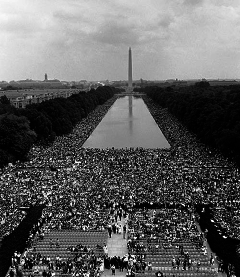
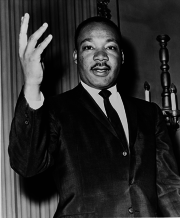
Martin Luther King Jr. stepped to the podium at the Lincoln Memorial on August 28, 1963, before a crowd of approximately 250,000 people and delivered a speech that would become the defining moral document of the American civil rights movement. The prepared text was powerful. What King improvised when he set his notes aside and began speaking about his dream was transcendent. The March on Washington for Jobs and Freedom was months in the planning. Organized by labor leader A. Philip Randolph and coordinated by Bayard Rustin, it brought together an unprecedented coalition of civil rights organizations, labor unions, and religious groups. Participants began arriving in Washington by bus, train, and plane on August 27. By the morning of August 28, the National Mall from the Washington Monument to the Lincoln Memorial was packed with marchers carrying signs demanding jobs, voting rights, desegregation, and an end to police brutality. An estimated 75 to 80 percent of the crowd was Black, but the presence of tens of thousands of white marchers gave the event an explicitly interracial character. King spoke last among a roster of civil rights leaders, musicians, and activists. His prepared remarks were strong but formal, building the case for racial justice through constitutional and biblical language. Partway through the speech, gospel singer Mahalia Jackson, standing nearby, called out: "Tell them about the dream, Martin!" King pushed his text aside and began the improvised peroration that would make the speech immortal. "I have a dream that my four little children will one day live in a nation where they will not be judged by the color of their skin but by the content of their character." The crowd erupted. The speech was broadcast live on national television and radio. President John F. Kennedy, watching from the White House, reportedly said: "He's damn good." The march and the speech are widely credited with building the political momentum that led to the Civil Rights Act of 1964 and the Voting Rights Act of 1965. King received the Nobel Peace Prize in 1964. He was assassinated in Memphis on April 4, 1968, at the age of 39, but the dream he articulated on the steps of the Lincoln Memorial became the moral standard against which America has measured itself ever since.
August 28, 1963
63 years ago
Key Figures & Places
What Else Happened on August 28
The Roman general Orestes marched on Ravenna with a barbarian army in August 475 AD and forced Emperor Julius Nepos to flee the capital by ship to Dalmatia. The…
Theodoric the Great crossed the Julian Alps into Italy in 489 AD with an Ostrogothic army and beat Odoacer — the man who had deposed the last Western Roman Empe…
Fatimah's death in 632 AD created an immediate succession crisis that split the Muslim community into what became the Sunni and Shia branches. Her supporters be…
The combined Silla and Tang Dynasty fleet crushed the forces of Baekje and their Japanese (Yamato) allies at the naval Battle of Baekgang, destroying over 400 Y…
Guy of Lusignan launched the Siege of Acre, pinning his forces against the formidable walls of the Ayyubid stronghold. This grueling two-year investment forced …
The Black Death reached Mainz in 1349, and the Jewish community was accused of causing it by poisoning wells. This was the standard accusation across Europe tha…
Talk to History
Have a conversation with historical figures who witnessed this era. Ask questions, explore perspectives, and bring history to life.