

Emmett Till Murdered: A Crime That Ignites Civil Rights
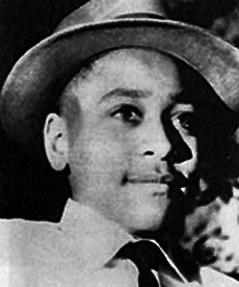
Emmett Till, a 14-year-old Black boy from Chicago visiting relatives in the Mississippi Delta, was kidnapped from his great-uncle's home in the early hours of August 28, 1955, by two white men. Three days later, his mutilated body was pulled from the Tallahatchie River, weighted down by a 70-pound cotton gin fan tied to his neck with barbed wire. His murder and the acquittal of his killers became one of the catalysts of the modern American civil rights movement. Till had allegedly violated the unwritten racial code of the Jim Crow South. On August 24, he entered Bryant's Grocery and Meat Market in Money, Mississippi, and interacted with Carolyn Bryant, the 21-year-old white proprietor. Accounts of what happened vary: witnesses said he whistled at her, grabbed her hand, or spoke to her in a familiar way. Carolyn Bryant claimed he made verbal and physical advances. Decades later, she recanted key parts of her testimony. Whatever occurred in the store, it was enough for her husband Roy Bryant and his half-brother J.W. Milam to arrive at the home of Till's great-uncle Moses Wright in the middle of the night. They took Till to a barn, beat him savagely, shot him in the head, and dumped his body in the river. When Till's body was recovered, it was so disfigured that Moses Wright could only identify his nephew by the initialed ring on his finger. Till's mother, Mamie Till-Bradley, made the extraordinary decision to hold an open-casket funeral in Chicago, insisting that the world see what had been done to her son. Jet magazine and the Chicago Defender published photographs of the body. Tens of thousands of mourners filed past the casket. Bryant and Milam were tried in September 1955 before an all-white jury in Sumner, Mississippi. The trial lasted five days. The jury deliberated for 67 minutes before returning a not-guilty verdict. One juror later said they would not have taken so long except they stopped to drink sodas. Months later, protected by double jeopardy laws, both men confessed to the killing in a paid interview with Look magazine. The photographs of Emmett Till's destroyed face, published across the nation and the world, mobilized a generation. Rosa Parks cited Till's murder as being on her mind when she refused to give up her bus seat three months later.
August 28, 1955
71 years ago
Key Figures & Places

What Else Happened on August 28

The Roman general Orestes marched on Ravenna with a barbarian army in August 475 AD and forced Emperor Julius Nepos to flee the capital by ship to Dalmatia. The…
Theodoric the Great crossed the Julian Alps into Italy in 489 AD with an Ostrogothic army and beat Odoacer — the man who had deposed the last Western Roman Empe…
Fatimah's death in 632 AD created an immediate succession crisis that split the Muslim community into what became the Sunni and Shia branches. Her supporters be…
The combined Silla and Tang Dynasty fleet crushed the forces of Baekje and their Japanese (Yamato) allies at the naval Battle of Baekgang, destroying over 400 Y…
Guy of Lusignan launched the Siege of Acre, pinning his forces against the formidable walls of the Ayyubid stronghold. This grueling two-year investment forced …
The Black Death reached Mainz in 1349, and the Jewish community was accused of causing it by poisoning wells. This was the standard accusation across Europe tha…
Talk to History
Have a conversation with historical figures who witnessed this era. Ask questions, explore perspectives, and bring history to life.