Pope John Paul I Elected: A Brief Papacy Begins
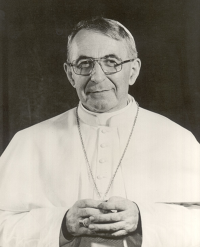
White smoke rose from the Sistine Chapel chimney on August 26, 1978, after one of the shortest conclaves of the twentieth century. Cardinal Albino Luciani of Venice emerged as Pope John Paul I, the first pope to take a double name, chosen to honor his two immediate predecessors. His broad, genuine smile earned him the nickname "the Smiling Pope." He would be dead in 33 days. Luciani was a surprise choice. He was not considered a leading candidate entering the conclave that followed the death of Paul VI. Cardinals were divided between progressive and conservative factions, and Luciani, a pastoral bishop with little curial experience, emerged as a compromise. He was the son of a migrant laborer from the Veneto region, spoke simply and directly, and was known for his warmth with ordinary parishioners. His election was widely interpreted as a signal that the cardinals wanted a pope who could communicate with people, not just govern bureaucracy. John Paul I immediately broke with several papal traditions. He refused the traditional papal coronation with the triple tiara, opting instead for a simple inauguration mass. He dropped the royal "we" from papal speech, referring to himself as "I." He spoke of the Church's duty to serve the poor and hinted at reforms to Vatican finances, which had been plagued by scandals involving the Vatican Bank and its connections to Italian financiers. His informal style delighted the public and reportedly alarmed some within the Vatican establishment. On September 28, 1978, John Paul I was found dead in his bed. The Vatican announced the cause as a heart attack and declined to authorize an autopsy, citing tradition. The hasty handling of the death fueled conspiracy theories that have never been conclusively resolved, ranging from poisoning by Vatican Bank officials to a cover-up of the circumstances of discovery. His successor, John Paul II, would reign for 26 years and become one of the most consequential popes in history. The Smiling Pope's month-long papacy remains one of the great what-ifs of modern Catholicism.
August 26, 1978
48 years ago
Key Figures & Places
What Else Happened on August 26
Yazid I’s Syrian army crushed the Medinan resistance at the Battle of al-Harrah, slaughtering thousands of the city’s inhabitants and soldiers. This brutal vict…
Seljuq Turks shattered the Byzantine army at Manzikert in 1071, capturing Emperor Romanos IV Diogenes and opening Anatolia to Turkish settlement. Within a gener…
Alp Arslan’s Seljuk forces crushed the Byzantine army at Manzikert, capturing Emperor Romanos IV Diogenes on the battlefield. This collapse shattered Byzantine …
Ottokar II of Bohemia had built the largest kingdom in Central Europe over thirty years of war, diplomacy, and inheritance. He controlled Bohemia, Austria, Styr…
The Rajput fortress of Chittorgarh fell to Alauddin Khalji's Delhi Sultanate army in 1303 after an eight-month siege, leading to one of the first recorded insta…
Chittorgarh had walls 22 kilometers long and held some of the most formidable fortifications on the Indian subcontinent. It fell to Ala ud-Din Khilji in 1303 af…
Talk to History
Have a conversation with historical figures who witnessed this era. Ask questions, explore perspectives, and bring history to life.