

Declaration of the Rights of Man Adopted: Liberty, Equality, Fraternity
The National Constituent Assembly of France approves the Declaration of the Rights of Man and of the Citizen, instantly codifying liberty, property, and resistance to oppression as fundamental national principles. This document dismantles the legal foundations of the French monarchy and sets a radical precedent that inspires democratic revolutions across Europe for centuries.
August 26, 1789
237 years ago
Key Figures & Places

Palace of Versailles
Wikipedia

national assembly
Wikipedia
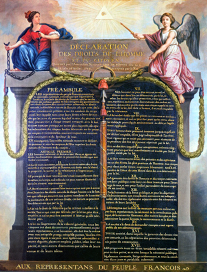
Declaration of the Rights of Man and of the Citize
Wikipedia

Declaration of the Rights of Man and of the Citizen
Wikipedia

France
Wikipedia

French Revolution
Wikipedia

National Constituent Assembly
Wikipedia

National Assembly (France)
Wikipedia

Jacques Chirac
Wikipedia

Valéry Giscard d'Estaing
Wikipedia

Marrakesh
Wikipedia
What Else Happened on August 26
Gaius Iulius Caesar führt seinen ersten Feldzug in Britannien.
Yazid I’s Syrian army crushed the Medinan resistance at the Battle of al-Harrah, slaughtering thousands of the city’s inhabitants and soldiers. This brutal vict…
Alp Arslan’s Seljuk forces crushed the Byzantine army at Manzikert, capturing Emperor Romanos IV Diogenes on the battlefield. This collapse shattered Byzantine …
Seljuq Turks shatter the Byzantine army at Manzikert, seizing control of most of Anatolia within a generation. This military collapse forces the Byzantine Empir…
en Montpellier, Jaime I de Aragón, ratifica en testamento las donaciones a sus hijos Pedro y Jaime: la baronía de Ayerbe para el primero, y la de Jérica para el…

Ottokar II of Bohemia had built the largest kingdom in Central Europe over thirty years of war, diplomacy, and inheritance. He controlled Bohemia, Austria, Styr…
Talk to History
Have a conversation with historical figures who witnessed this era. Ask questions, explore perspectives, and bring history to life.