Britain Seizes Hong Kong: Opium War Begins
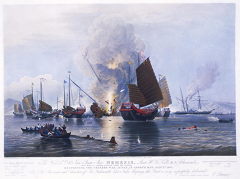
British naval forces occupied the sparsely populated island of Hong Kong on August 23, 1839, establishing a base of operations for what would become one of history's most notorious wars fought over the right to sell drugs. The seizure marked the opening move of the First Opium War, a three-year conflict that forced China's doors open to Western trade and began a century of humiliation that still shapes Chinese foreign policy. The crisis had been building for decades. British merchants, operating through the East India Company, had been shipping Indian-grown opium to China in massive quantities, creating millions of addicts and draining Chinese silver reserves. When the Qing dynasty's special commissioner Lin Zexu confiscated and destroyed 20,000 chests of British opium in Canton, London treated the destruction of private property as a cause for war. The underlying issue was Britain's trade deficit with China: the empire consumed enormous quantities of Chinese tea, silk, and porcelain but could sell almost nothing in return except opium. Hong Kong offered a deep natural harbor and a defensible position at the mouth of the Pearl River. British Superintendent of Trade Charles Elliot claimed the island after Chinese war junks clashed with British vessels in the Battle of Kowloon. From this base, the Royal Navy blockaded Chinese ports and shelled coastal forts with steam-powered warships that the Qing navy could not match. Chinese resistance was fierce but technologically outmatched. The war ended with the Treaty of Nanking in 1842, which ceded Hong Kong to Britain "in perpetuity," opened five Chinese ports to British trade, imposed a massive indemnity, and granted extraterritorial legal rights to British citizens in China. The treaty became the template for a series of "unequal treaties" that other Western powers and Japan imposed on China over the following decades. Britain held Hong Kong for 156 years, returning it to China in 1997 under circumstances neither empire could have imagined.
August 23, 1839
187 years ago
Key Figures & Places

What Else Happened on August 23
After conquering Egypt, Octavian ordered the execution of Marcus Antonius Antyllus, the eldest son of Marc Antony, and Caesarion, the teenage son of Julius Caes…
Augustus used the Ludi Volcanalici — games held in the precinct of Vulcan's temple — to celebrate Rome's diplomatic triumph over Parthia and the return of the l…
Mount Vesuvius erupted on the feast day of Vulcan, burying Pompeii and Herculaneum under layers of volcanic ash and pumice. This sudden catastrophe perfectly pr…
Roman general Stilicho defeated the Gothic king Radagaisus in 406 AD, executing him and absorbing 12,000 of his warriors into the Roman army or selling them int…
The Germanic chieftain Odoacer was proclaimed King of Italy by his troops after deposing the last Western Roman Emperor, the teenaged Romulus Augustulus, in a b…
Abu Bakr, the first caliph of Islam and closest companion of the Prophet Muhammad, died in Medina in 634 AD after just two years of leadership during which he h…
Talk to History
Have a conversation with historical figures who witnessed this era. Ask questions, explore perspectives, and bring history to life.