

King George Declares Rebellion: War on the Colonies
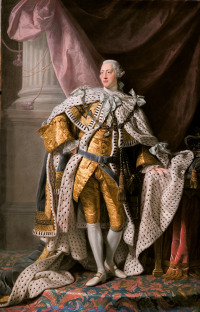
King George III stood before his Privy Council on August 23, 1775, and declared the American colonies in a state of open rebellion. The proclamation, officially issued on August 22, ordered all loyal subjects to help suppress the uprising and report anyone engaged in "traitorous conspiracies." With those words, the king eliminated any remaining ambiguity: Britain would use military force to crush the colonial resistance. The declaration came four months after the battles of Lexington and Concord and two months after Bunker Hill, where British soldiers had suffered over a thousand casualties taking a fortified position from colonial militia. The Continental Congress had already authorized the creation of a Continental Army under George Washington. Yet many colonists, and some members of Parliament, still hoped for reconciliation. The Continental Congress had sent the Olive Branch Petition to London in July, professing loyalty to the Crown while asking the king to intervene against Parliament's punitive legislation. George III refused to read the petition. His proclamation framed the conflict not as a dispute over taxation or governance but as criminal rebellion against lawful authority. The language was deliberate: calling the colonists rebels rather than petitioners placed them outside the protection of law and made their leaders subject to execution for treason. Lord North's government followed up with the Prohibitory Act, which blockaded colonial ports and authorized seizure of American ships. The proclamation had the opposite of its intended effect. Colonists who had clung to the hope of compromise now faced a binary choice: submit or fight. Moderates in the Continental Congress lost their argument for negotiation. Within five months, Thomas Paine published Common Sense, which sold 500,000 copies and argued for full independence. Within eleven months, the Declaration of Independence was signed. George III's refusal to hear his subjects' grievances became the catalyst for the nation they built without him.
August 22, 1775
251 years ago
Key Figures & Places
What Else Happened on August 22
General Arbogast elevated the rhetorician Eugenius to the Western Roman throne, bypassing the authority of the Eastern Emperor Theodosius I. This bold power pla…
Odoacer was a soldier, not a visionary. He led a coalition of Germanic troops who'd grown tired of waiting for pay and land grants from the Western Roman Empire…
Saint Columba encountered a massive water beast while crossing the River Ness, reportedly commanding the creature to retreat after it attacked a swimmer. This a…
Erispoe’s Breton forces crushed the army of Charles the Bald at the Battle of Jengland, compelling the Frankish king to recognize Breton independence. This vict…
The Battle of the Standard in 1138 takes its name from a ship's mast mounted on a wagon, carrying the banners of Yorkshire saints, that the English army used as…
King Baldwin III's coalition of Templars and Hospitallers seized the fortress of Ascalon from Fatimid Egypt, finally removing the last major Muslim stronghold t…
Talk to History
Have a conversation with historical figures who witnessed this era. Ask questions, explore perspectives, and bring history to life.