Davis Quits Senate: Civil War Begins
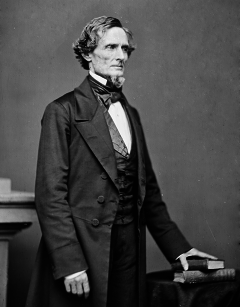
Jefferson Davis stood in the United States Senate chamber and delivered words he called the saddest of his life. On January 21, 1861, the senator from Mississippi formally announced his state''s secession from the Union and resigned his seat. His voice broke as he spoke, and several observers reported that both Davis and members of the gallery wept openly. It was the last act of a political career in Washington that had spanned two decades. Mississippi had voted to secede on January 9, following South Carolina''s lead the previous month. Davis, a West Point graduate, Mexican-American War hero, and former Secretary of War under Franklin Pierce, was among the most respected Southern politicians in the capital. He had actually argued against immediate secession, urging Mississippi to exhaust all political remedies first. But once his state acted, he considered himself bound by its decision—a reflection of the states'' rights philosophy that defined Southern political thought. Davis departed alongside four other Southern senators that day: Clement Clay and Benjamin Fitzpatrick of Alabama, and David Yulee and Stephen Mallory of Florida. The scene was electric with emotion. Spectators packed the galleries, and Davis''s farewell speech was met with a mix of tears and scattered applause. He asked for peace but warned that any attempt at coercion would be met with resistance. Within three weeks, Davis was named provisional president of the Confederate States of America at a convention in Montgomery, Alabama. His departure from the Senate marked the final failure of compromise and the effective beginning of the sectional crisis''s transformation into armed conflict. The Civil War, which would claim over 620,000 lives across four years, became all but inevitable the moment Davis walked out of that chamber.
January 21, 1861
165 years ago
Key Figures & Places
What Else Happened on January 21
Blood pooled in the dusty plains outside Kufa. The Alid rebellion—led by Muhammad ibn Abdullah—had gambled everything on this moment. But the Abbasid caliphate'…
Ibrahim's rebellion burned bright—and brief. Just months after launching his challenge to Abbasid authority, he lay dead on the dusty battlefield near Kufa, his…
Philip II of France and Richard I of England set aside their bitter territorial rivalries to mobilize their armies for the Third Crusade. This uneasy alliance r…
He'd been waiting years. Alfons III didn't just want another island—he wanted strategic control of the Mediterranean trade routes. And Minorca? A jewel ripe for…
A small group of believers gathered in a private home in Zurich and did something that could get them drowned: they baptized each other as adults. On January 21…
A blasphemous poster nailed to the king's bedroom door. Scathing attacks on the Catholic Mass, pinned everywhere from street corners to the royal palace. Franci…
Talk to History
Have a conversation with historical figures who witnessed this era. Ask questions, explore perspectives, and bring history to life.