Louis XVI Falls: Monarchy Ends with Guillotine
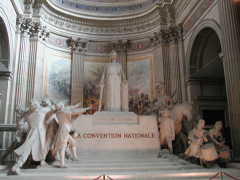
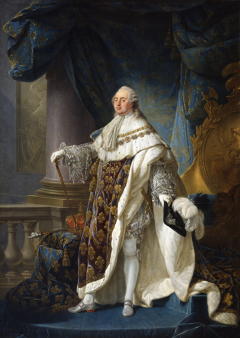
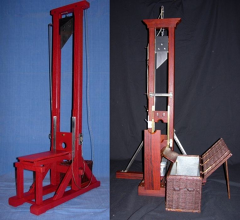
A king knelt before 20,000 spectators in the Place de la Révolution, and the blade fell at 10:22 a.m. Louis XVI, once the absolute monarch of Europe''s most powerful nation, died with a composure that surprised even his executioners. His final words—"I die innocent of all the crimes laid to my charge"—were drowned out by a drum roll ordered by General Santerre. The execution was the culmination of a trial that had divided revolutionary France. The National Convention voted 361 to 288 for death, with even the king''s cousin, the Duke of Orléans, casting a vote for execution. Louis had been held in the Temple prison since the storming of the Tuileries Palace in August 1792, stripped of his title and referred to simply as "Citizen Louis Capet." His defense lawyers argued he was protected by the 1791 Constitution, but the Convention declared itself both judge and jury. France had been a monarchy for over a thousand years. The Bourbon dynasty alone had ruled for two centuries. When the executioner held the severed head aloft, the crowd erupted in cries of "Vive la République!" Soldiers dipped their handkerchiefs in the royal blood as souvenirs. Within days, the news sent shockwaves through every court in Europe. Spain, Britain, and the Dutch Republic joined the growing coalition against revolutionary France, plunging the continent into a generation of warfare. The regicide transformed the Revolution from a constitutional reform movement into a radical experiment in republican government. It emboldened the Jacobins, accelerated the Terror, and created a political precedent that haunted European monarchs for decades. Napoleon would later remark that the execution was an act from which there was no return—the point where the Revolution devoured the world that created it.
January 21, 1793
233 years ago
Key Figures & Places
What Else Happened on January 21
Blood pooled in the dusty plains outside Kufa. The Alid rebellion—led by Muhammad ibn Abdullah—had gambled everything on this moment. But the Abbasid caliphate'…
Ibrahim's rebellion burned bright—and brief. Just months after launching his challenge to Abbasid authority, he lay dead on the dusty battlefield near Kufa, his…
Philip II of France and Richard I of England set aside their bitter territorial rivalries to mobilize their armies for the Third Crusade. This uneasy alliance r…
He'd been waiting years. Alfons III didn't just want another island—he wanted strategic control of the Mediterranean trade routes. And Minorca? A jewel ripe for…
A small group of believers gathered in a private home in Zurich and did something that could get them drowned: they baptized each other as adults. On January 21…
A blasphemous poster nailed to the king's bedroom door. Scathing attacks on the Catholic Mass, pinned everywhere from street corners to the royal palace. Franci…
Talk to History
Have a conversation with historical figures who witnessed this era. Ask questions, explore perspectives, and bring history to life.