Gold Rush Begins: 100,000 Flood the Klondike
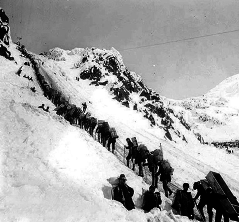
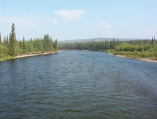
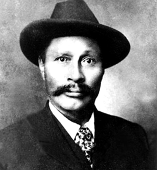
Three men crouching beside Rabbit Creek in Canada's Yukon Territory on August 16, 1896, scooped gold from the gravel and changed the course of North American history. Skookum Jim Mason, a member of the Tagish First Nation, made the actual discovery, though his brother-in-law George Washington Carmack filed the official claim. Within a year, the news had reached Seattle and San Francisco, and roughly 100,000 people abandoned their lives to chase gold to the Klondike. The timing was explosive. The United States was mired in a severe economic depression that had begun with the Panic of 1893. Banks had failed, unemployment ran above 15 percent, and the gold standard debate dominated American politics. When the steamship Portland docked in Seattle on July 17, 1897, carrying "a ton of gold" from the Klondike, the news offered something more powerful than economic policy: the promise that any ordinary person could strike it rich through grit and luck alone. The reality was merciless. To reach the goldfields, prospectors had to cross the Coast Mountains through either the Chilkoot Pass or White Pass, both of which earned the nickname "Dead Horse Trail" for the thousands of pack animals that perished along the way. Canadian authorities required each person to carry a year's supply of food, roughly one ton of provisions, which most had to shuttle in multiple trips. Those who survived the mountains still faced a 500-mile journey down the Yukon River. Of the 100,000 who set out, approximately 30,000 reached Dawson City, and only about 4,000 found gold. The rush transformed the region permanently. Dawson City exploded from a population of 500 to roughly 30,000 by the summer of 1898, complete with saloons, theaters, and telegraph service. The Han people, indigenous inhabitants of the Klondike valley, were displaced to a reserve downriver. When gold was discovered in Nome, Alaska, in 1899, the stampede shifted and Dawson emptied almost as quickly as it had filled. The Klondike became a ghost of its brief, feverish glory.
August 16, 1896
130 years ago
Key Figures & Places

What Else Happened on August 16
Wang Mang seized the title of Marshal of State, hijacking the Han Dynasty’s administrative machinery following the childless death of Emperor Ai. By positioning…
Hamdanid forces from Mosul engaged Baridi troops from Basra in a four-day battle near Baghdad beginning on August 16, 942, fighting for control of the Abbasid c…
General Nikephoros II Phokas seized the Byzantine throne after his predecessor's death, backed by the army that had just reconquered Crete from the Arabs under …
The House of Gonzaga seized control of Mantua in 1328 through a popular revolt against the ruling Bonacolsi family, beginning a dynasty that would govern the ci…
The Hongwu Emperor of Ming China received a case in 1384 involving a couple who had torn paper money during an argument. Destroying imperial currency was techni…
The Battle of Guinegate in 1513 is remembered by the English as the 'Battle of the Spurs' — not because of cavalry charges, but because the French cavalry fled …
Talk to History
Have a conversation with historical figures who witnessed this era. Ask questions, explore perspectives, and bring history to life.