V-J Day: Japan Capitulates, World War II Over
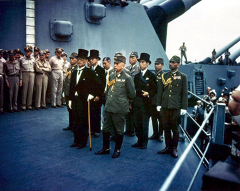
Crowds erupted across the Allied world on August 15, 1945, as news spread that Japan had surrendered unconditionally and the Second World War was finally over. In New York's Times Square, an estimated two million people flooded the streets in spontaneous celebration. A sailor kissed a nurse, a photographer clicked the shutter, and the image became one of the most reproduced photographs of the century. Six years of global conflict that had killed between 70 and 85 million people had reached their end. V-J Day, Victory over Japan Day, arrived after a sequence of shattering blows that left Japan's military leadership unable to continue. The atomic bombing of Hiroshima on August 6 killed approximately 80,000 people instantly and tens of thousands more from radiation in the following weeks. Nagasaki was struck three days later, killing 40,000 on impact. Between these two bombs, the Soviet Union declared war on Japan and invaded Manchuria with 1.5 million troops, destroying the Kwantung Army and eliminating any possibility of a negotiated peace through Moscow. Emperor Hirohito broke the deadlock among his advisors by personally deciding to accept the terms of the Potsdam Declaration, which demanded unconditional surrender. His recorded radio address, broadcast at noon Japan time on August 15, was the first time most Japanese citizens had ever heard their emperor's voice. Hirohito never used the word "surrender," instead stating that Japan must "endure the unendurable." Across the empire, soldiers and civilians reacted with shock, grief, and for some, relief. The formal ceremony took place on September 2 aboard the USS Missouri in Tokyo Bay, where Japanese Foreign Minister Mamoru Shigemitsu and General Yoshijiro Umezu signed the instrument of surrender before representatives of nine Allied nations. General Douglas MacArthur, presiding over the ceremony, called for "a better world" to emerge from "the blood and carnage of the past." The occupation of Japan that followed would last seven years and remake the nation into a democratic, demilitarized state that became America's most important Asian ally.
August 15, 1945
81 years ago
Key Figures & Places
What Else Happened on August 15
Rashidun forces engaged the Byzantine Empire in a grueling six-day struggle near the Yarmouk River, shattering Byzantine control over the Levant. This decisive …
Maslamah ibn Abd al-Malik launched the Second Arab Siege of Constantinople, encircling the city with a massive land and naval force. This year-long blockade tes…
The Second Arab Siege of Constantinople collapsed in 718 AD after a year of brutal fighting. Byzantine defenders used Greek fire — an incendiary weapon whose ex…
Carloman, who had co-ruled the Frankish Kingdom with his brother Pepin the Short as joint mayors of the palace, abruptly renounced his position and retired to a…
Basque forces ambushed Charlemagne's rearguard at Roncevaux Pass in the Pyrenees, killing several Frankish nobles including Roland, the Warden of the Breton Mar…
Basque tribes ambushed Charlemagne’s rearguard in the Pyrenees, slaughtering his commanders, including the Frankish hero Roland. This tactical defeat halted Cha…
Talk to History
Have a conversation with historical figures who witnessed this era. Ask questions, explore perspectives, and bring history to life.