

Japan Surrenders: World War II Ends
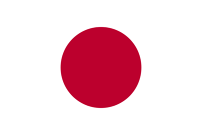
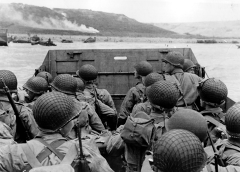
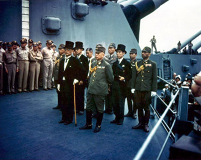
Emperor Hirohito's voice crackled through radio speakers across Japan at noon on August 15, 1945, and for the first time in history, ordinary Japanese citizens heard their sovereign speak. His message, recorded the previous day in the imperial palace, announced that Japan had accepted the Allied terms of surrender. Most listeners, struggling with the formal court Japanese, understood only that the war was over. Some wept. Some knelt. A group of officers attempted a coup to prevent the broadcast. The deadliest war in human history was ending. The decision to surrender followed two atomic bombings and a Soviet declaration of war that collectively shattered any remaining hope of negotiating favorable peace terms. Hiroshima had been destroyed on August 6, Nagasaki on August 9. On the same day as Nagasaki, the Soviet Union invaded Manchuria with 1.5 million troops, demolishing the Japanese Kwantung Army in days. The Supreme War Council remained deadlocked between those who favored surrender and those who demanded a final defense of the homeland, until Hirohito personally intervened on August 14, breaking the tie in favor of peace. The emperor's broadcast, known as the Gyokuon-hoso or "Jewel Voice Broadcast," was a masterpiece of understatement. Hirohito acknowledged that "the war situation has developed not necessarily to Japan's advantage" and referenced the atomic bombs as "a new and most cruel weapon." He made no mention of surrender, using instead the phrase "endure the unendurable." The recording had nearly been seized by rebel officers who stormed the palace overnight on August 14 in a failed attempt to continue the war. The formal surrender ceremony took place on September 2, 1945, aboard the USS Missouri in Tokyo Bay, with representatives from nine Allied nations witnessing Japanese officials sign the instrument of surrender. The war that had killed an estimated 70 to 85 million people was officially over. Japan's occupation by American forces would last until 1952, fundamentally reshaping Japanese society, governance, and its relationship with the world.
August 14, 1945
81 years ago
Key Figures & Places
What Else Happened on August 14
Huo Guang and fellow officials thrust articles of impeachment against Emperor Liu He before Empress Dowager Shangguan, compelling her to depose the ruler just t…
Octavian held the second of his three consecutive Roman triumphs celebrating military campaigns that had established his dominance over the Mediterranean world.…
Macbeth killed King Duncan I of Scotland in battle near Elgin in 1040, not in his bed as Shakespeare would later dramatize it. Duncan had been a weak king who l…
The Taira clan carried a child emperor and the imperial regalia out of Kyoto and ran. It was 1183. The Minamoto were coming. Taira no Munemori made the decision…
Genoese forces lured the Venetian galley fleet eastward toward the Levant with a feint, then swung back to intercept and capture an entire Venetian trade convoy…
Count Adolf VIII of Berg granted town privileges to Dusseldorf in 1288, transforming a small fishing village on the banks of the Dussel River into a formally re…
Talk to History
Have a conversation with historical figures who witnessed this era. Ask questions, explore perspectives, and bring history to life.