

Berlin Wall Rises: Germany Divided Overnight
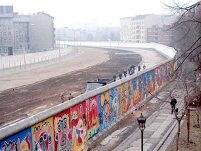
East German soldiers unrolled barbed wire across the heart of Berlin in the predawn hours of August 13, 1961, severing a city that had functioned as a single organism for seven centuries. By morning, families were separated, subway lines were cut, and the border between East and West Berlin was sealed. The barrier that began as a fence of wire and wooden posts would harden into 96 miles of reinforced concrete, guard towers, and minefields that became the Cold War's most powerful symbol. The wall was born of desperation. Since the creation of two German states in 1949, roughly 3.5 million East Germans had fled to the West, many by simply crossing from East Berlin to West Berlin and boarding a plane. The hemorrhage was destroying the East German economy, draining it of doctors, engineers, and skilled workers. By 1961, an average of 1,000 people were leaving daily. Walter Ulbricht, the East German leader, had been pressing Soviet Premier Nikita Khrushchev for permission to close the border. On June 15, Ulbricht told the press that "no one has the intention of erecting a wall," using the word publicly for the first time. Khrushchev gave his approval after gauging that President John F. Kennedy would not risk war over Berlin's internal boundary. He was right. Kennedy privately told aides that "a wall is a hell of a lot better than a war." The American response was limited to diplomatic protests. On the night of August 12, Ulbricht signed the order, and at midnight, police and army units began sealing the border with a speed that caught West Berliners completely off guard. The wall stood for 28 years. At least 140 people died attempting to cross it. When it finally fell on November 9, 1989, the scenes of jubilant Berliners dancing atop the concrete slabs became among the most celebrated images of the 20th century. But on that August morning in 1961, the wall's construction confirmed the Cold War's most brutal truth: an entire government had chosen to imprison its own population rather than reform itself.
August 13, 1961
65 years ago
Key Figures & Places
What Else Happened on August 13
The Lounsbury correlation dates the start of the Maya Long Count calendar to August 13, 3114 BCE — a date calculated backward by correlating Maya astronomical r…
Octavian paraded through Rome in the first of three consecutive triumphs celebrating his military campaigns against the Dalmatian tribes of Illyricum. The proce…
John I ascended to the papacy following the death of Hormisdas, inheriting a church deeply entangled in the politics of the Ostrogothic Kingdom. His brief tenur…
Emperor Justinian I issued the Pragmatic Sanction of 554 AD, rewarding the aged general Liberius with extensive estates across recently reconquered Italy for de…
Maurice ascended the Byzantine throne, inheriting a treasury drained by his predecessor’s wars and a military stretched thin by Persian and Avar incursions. His…
Prince Adelchis of Benevento seized Emperor Louis II and Empress Engelberga during a surprise raid on their camp, holding the imperial couple hostage for weeks.…
Talk to History
Have a conversation with historical figures who witnessed this era. Ask questions, explore perspectives, and bring history to life.