

Kursk Sinks: Russian Submarine Disaster Claims 118
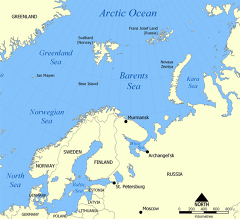
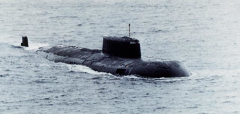
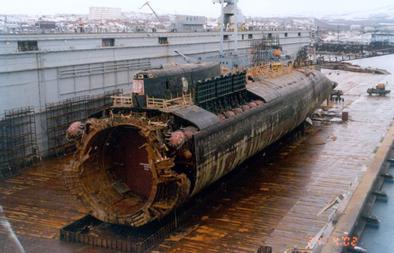
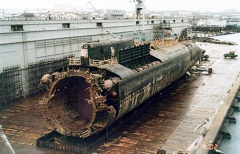
Two explosions ripped through the Russian nuclear submarine Kursk on August 12, 2000, as it conducted torpedo exercises in the Barents Sea. The first blast, caused by a faulty torpedo propellant leak, registered 1.5 on the Richter scale. The second, 135 seconds later, hit 4.2 as the remaining torpedo warheads detonated simultaneously. The Oscar-II class submarine plunged 350 feet to the seabed. All 118 crew members died. The Kursk was one of the Russian Navy's most formidable vessels, a 505-foot cruise missile submarine designed during the Cold War to destroy American aircraft carrier groups. It had been the pride of the Northern Fleet. On the morning of August 12, its crew was preparing to fire a practice torpedo when hydrogen peroxide fuel from a corroded weld inside a torpedo tube began to leak. The resulting chemical reaction triggered the first explosion, which killed everyone in the forward compartments. Twenty-three sailors in the rear compartments survived the initial blasts. Captain-Lieutenant Dmitri Kolesnikov wrote a note in the darkness listing the names of those still alive and adding: "None of us can get to the surface." The survivors are believed to have lasted several hours before their emergency oxygen-generating cartridges malfunctioned, likely causing a flash fire that consumed the remaining breathable air. The Russian government's response became a defining scandal of Vladimir Putin's early presidency. Moscow initially denied anything was wrong, then refused offers of foreign assistance for days while its own rescue submersibles failed repeatedly. Norwegian and British divers eventually opened the escape hatch on August 21, nine days after the sinking, confirming there were no survivors. Putin, who had remained on vacation during the first days of the crisis, faced furious confrontation from victims' families on national television. The disaster exposed the decay of Russia's military infrastructure and the reflexive secrecy of its political culture.
August 12, 2000
26 years ago
Key Figures & Places

What Else Happened on August 12

Egypt's last pharaoh chose death over a Roman triumph. Cleopatra VII, the final ruler of the Ptolemaic dynasty that had governed Egypt for nearly three centurie…

Barely a month after capturing Jerusalem in a bloodbath that shocked even medieval chroniclers, the armies of the First Crusade rode south to meet the last majo…
At the Battle of Didgori in 1121, King David IV of Georgia attacked a Seljuk force that outnumbered his army by a ratio sometimes estimated at 8-to-1. He used a…
Nur ad-Din Zangi defeated a combined Crusader force at Harim in 1164, capturing the Count of Tripoli, the Prince of Antioch, and other senior commanders in a si…
Kublai Khan sent two invasion fleets to Japan — in 1274 and in 1281. Both were destroyed by storms. The 1281 fleet was enormous: perhaps 140,000 men across 4,00…
Sweden and the Republic of Novgorod signed the Treaty of Noteborg, establishing the border between the two powers for the first time in a formal international a…
Talk to History
Have a conversation with historical figures who witnessed this era. Ask questions, explore perspectives, and bring history to life.