Smithsonian Founded: America's Museum Opens Its Doors
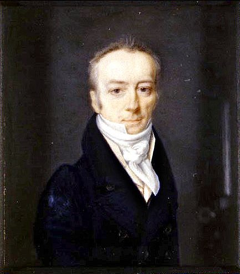
An Englishman who never visited America left it half a million dollars in gold to build something that had never existed before. James Smithson, an illegitimate son of the Duke of Northumberland and a respected chemist, died in 1829 and bequeathed his fortune to the United States "for the increase and diffusion of knowledge among men." Why Smithson chose a country he had never seen remains one of history's unsolved puzzles. On August 10, 1846, after eight years of Congressional bickering over what to do with the money, President James K. Polk signed the legislation establishing the Smithsonian Institution. The bequest arrived in dramatic fashion. Diplomat Richard Rush sailed to England in 1838 and returned with 105 sacks containing 104,960 gold sovereigns, roughly $500,000 — an enormous sum at the time. Congress then proceeded to nearly squander the gift. The Treasury invested it in Arkansas state bonds that promptly defaulted. Former President John Quincy Adams, then serving as a Massachusetts congressman, waged a tireless campaign to restore the lost funds and prevent Congress from diverting the money to other purposes. The debate over the institution's purpose consumed years. Some wanted a national university. Others proposed an astronomical observatory, a library, or a laboratory. The compromise legislation created a hybrid: an institution governed by a Board of Regents that would encompass a museum, a library, a gallery of art, and a program of scientific research. Joseph Henry, one of America's leading physicists, became the first Secretary and pushed the institution firmly toward original scientific research rather than mere collection. The Smithsonian grew into the world's largest museum and research complex, encompassing 21 museums, the National Zoo, and nine research facilities. Its collections hold more than 155 million objects. Admission remains free, honoring the spirit of a bequest from a man who believed knowledge should be available to everyone, a principle he embedded in a nation he chose from across an ocean.
August 10, 1846
180 years ago
Key Figures & Places
What Else Happened on August 10
Nineveh fell in 612 BCE. The Assyrian Empire had been the most powerful military machine in the ancient Near East for centuries — they used mass deportations, s…
The Prophet Muhammad received his first revelation from the angel Jibril within the cave of Hira, initiating the descent of the Qur'an. This night, known as Lay…
Pope Eugene I was elected in 654 while his predecessor Martinus I was still alive in exile — arrested by the Byzantine Emperor for opposing imperial theology. E…
The Battle of Lechfeld in 955 ended fifty years of Magyar raids into Western Europe. Otto I of Germany met a Magyar force on the Lech River with a cavalry charg…
The Battle of Maldon in 991 is famous because it failed so completely and someone wrote a poem about it. The English earl Bryhtnoth faced a Viking raiding party…
Byzantine Emperor Romanos III Argyros led his army against the Mirdasid rulers of Aleppo at the Battle of Azaz on August 10, 1030, only to see his forces crumbl…
Talk to History
Have a conversation with historical figures who witnessed this era. Ask questions, explore perspectives, and bring history to life.