

Amiens Offensive: The Hundred Days Begin WWI's End
German General Erich Ludendorff called it "the black day of the German army." On August 8, 1918, a combined British, Australian, Canadian, and French force launched a surprise attack near Amiens that shattered the German front line and began the Hundred Days Offensive — the relentless Allied advance that would end World War I. By nightfall, the attackers had pushed forward eight miles on some sectors, the largest single-day territorial gain on the Western Front since trench warfare had begun in 1914. The assault succeeded through a combination of deception, combined arms, and collapsing German morale. Allied commanders, particularly Australian General John Monash and Canadian General Arthur Currie, employed tactics that foreshadowed modern warfare: creeping artillery barrages, infantry advancing closely behind tanks, and aircraft providing close air support and dropping ammunition to forward units. More than 500 tanks participated, the largest armored deployment of the war. The surprise was total. German intelligence had no warning of the attack's location or timing. Dense morning fog concealed the advancing troops and tanks until they were nearly on top of the German trenches. Entire German divisions surrendered or collapsed. By the end of the first day, the Allies had captured over 12,000 prisoners and 350 guns. Ludendorff noted with alarm that units had shouted "blackleg" and "war prolonger" at reserves moving up to the front, a sign that German soldiers' will to fight was breaking. The battle itself lasted until August 12, but its strategic impact was immediate. Ludendorff informed the Kaiser that the war could no longer be won militarily and recommended opening peace negotiations. The Hundred Days Offensive continued through September and October with a series of hammer blows along the entire Western Front, driving the German army back toward its own borders. The Armistice came on November 11. Amiens was the battle that broke the deadlock of four years of trench warfare and ended the war.
August 8, 1918
108 years ago
Key Figures & Places

Germany
Wikipedia
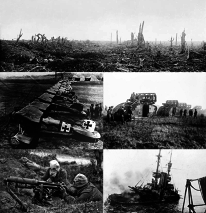
World War I
Wikipedia
Battle of Amiens
Wikipedia
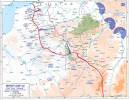
Hundred Days Offensive
Wikipedia

Battle of Amiens
Wikipedia

World War I
Wikipedia

Battle of Amiens (1918)
Wikipedia

Hundred Days Offensive
Wikipedia

Allies of World War I
Wikipedia

Erich Ludendorff
Wikipedia

Gorizia
Wikipedia

Italy
Wikipedia

Prince Emanuele Filiberto, Duke of Aosta
Wikipedia

Caucasus
Wikipedia

Bataille de Bitlis
Wikipedia

Albano Lugli
Wikipedia
Liste de peintres italiens
Wikipedia

Céramique
Wikipedia
What Else Happened on August 8

Duke Zhuang of Lu marched an army into the Duchy of Qi to install the exiled prince Gongzi Jiu on the throne, only to crash against Duke Huan's newly mustered f…
King Louis the German and Charles the Bald split the Middle Frankish Kingdom at Meerssen, carving it into distinct eastern and western territories. This divisio…
Estonian tribes crushed the Swedish crusading army at the Battle of Lihula, killing the Swedish bishop Karl Magnusson and his jarl, Karl Döve. This decisive rou…
Muslim rebels stormed the Alcazar of Jerez de la Frontera in August 1264, killing the Castilian garrison and seizing the fortress in the opening act of the Mude…
James IV of Scotland married Margaret Tudor, daughter of Henry VII of England, at Holyrood Abbey in Edinburgh, creating a dynastic bond between the two kingdoms…
Krishnadeva Raya ascended the throne of the Vijayanagara Empire, initiating a golden age of military expansion and cultural patronage across southern India. His…
Talk to History
Have a conversation with historical figures who witnessed this era. Ask questions, explore perspectives, and bring history to life.