

Spanish Armada Defeated at Gravelines: England Survives
The English fleet's fire ships scatter the Spanish Armada at Gravelines, sending the battered Spanish galleons into a chaotic retreat around Scotland and Ireland. This decisive defeat shatters Philip II's invasion plans, securing Protestant rule in England while triggering a slow decline for Spain's naval dominance.
August 8, 1588
438 years ago
Key Figures & Places
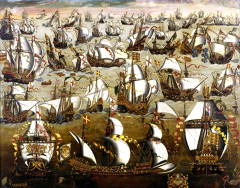
Spanish Armada
Wikipedia
Anglo-Spanish War (1585)
Wikipedia
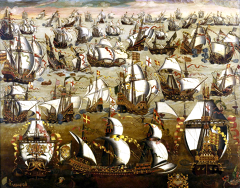
Spanish Armada#Battle of Gravelines
Wikipedia
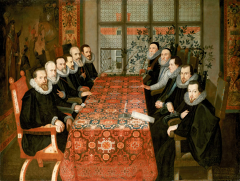
Anglo-Spanish War
Wikipedia

Anglo-Spanish War
Wikipedia

Spanish Armada
Wikipedia

England
Wikipedia

Plymouth
Wikipedia

Imperial Trans-Antarctic Expedition
Wikipedia

Ernest Shackleton
Wikipedia

Antarctica
Wikipedia

Batalla naval de Gravelinas
Wikipedia

Francis Drake
Wikipedia
John Felton (martyr)
Wikipedia

1570
Wikipedia

Elizabeth I
Wikipedia
John Fingley
Wikipedia
Robert Bickerdike (martyr)
Wikipedia

1586
Wikipedia

Beato
Wikipedia

York
Wikipedia

Juana de Aza
Wikipedia
1203
Wikipedia

Vieille-Castille
Wikipedia
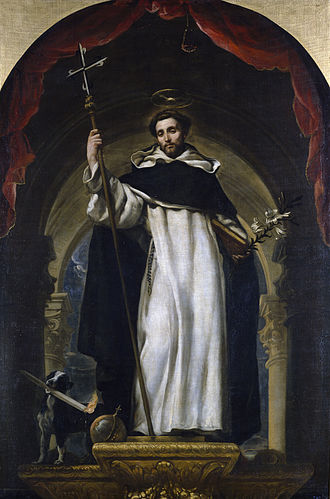
Saint Dominic
Wikipedia
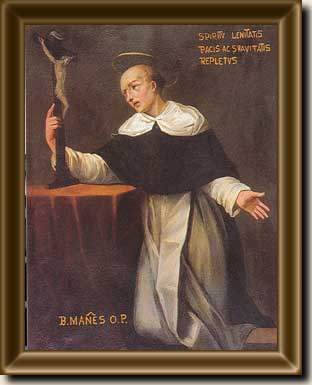
Manés de Guzmán
Wikipedia
IXe siècle
Wikipedia

Bavaria
Wikipedia
Canon (title)
Wikipedia

Augsburgo
Wikipedia

Diessen
Wikipedia

Mártires españoles del siglo XX
Wikipedia

1936
Wikipedia

Valencia
Wikipedia

Spanish Civil War
Wikipedia
1940
Wikipedia

Poznań
Wikipedia

Concentration camp
Wikipedia

Camp de concentration de Gusen
Wikipedia

Austria
Wikipedia

Heroic Age of Antarctic Exploration
Wikipedia
Bundesliga (Alemania)
Wikipedia

FC Augsburg
Wikipedia

Geschichte Englands
Wikipedia

Royal Navy
Wikipedia
Seeherrschaft
Wikipedia
Evangelical Lutheran Church in America
Wikipedia
Dominikustag
Wikipedia
What Else Happened on August 8

Duke Zhuang of Lu marched into Qi to install the exiled prince Gongzi Jiu, only to crash against Duke Huan's forces at Qianshi. This defeat cemented Duke Huan's…
en la ciudad de Éfeso (en la actual Turquía) comienza el Segundo Concilio de Éfeso, que el emperador Teodosio II había convocado el 30 de marzo. Hasta el 22 de …
en Antioquía (Siria), las fuerzas del usurpador Leoncio y su mentor Illos son derrotados ante la ciudad por las tropas de Zenón y obligados a exiliarse.
نزول القرآن وبعثة النبي محمد ﷺ، وفقاً لرأي صفي الرحمن المباركفوري.
King Louis the German and Charles the Bald split the Middle Frankish Kingdom at Meerssen, carving it into distinct eastern and western territories. This divisio…
Estonian tribes crushed the Swedish crusading army at the Battle of Lihula, killing the Swedish bishop Karl Magnusson and his jarl, Karl Döve. This decisive rou…
Talk to History
Have a conversation with historical figures who witnessed this era. Ask questions, explore perspectives, and bring history to life.