Kon-Tiki Crosses Pacific: Heyerdahl Proves a Theory
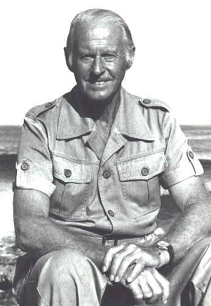
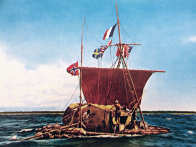
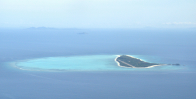
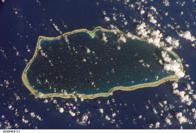
A balsa wood raft slammed into a reef in the South Pacific after 101 days at sea, and the six men aboard crawled onto a tiny atoll to prove a point about ancient migration. On August 7, 1947, Thor Heyerdahl's Kon-Tiki completed its 4,300-mile journey from Peru to the Tuamotu Islands in French Polynesia, demonstrating that pre-Columbian South Americans could have reached Polynesia using only materials and navigation methods available to them centuries ago. The raft was named for Kon-Tiki, an old name for the Inca sun god Viracocha. Heyerdahl, a Norwegian explorer and ethnographer, had developed his theory after years of studying cultural similarities between South America and Polynesia — shared legends, similar stonework, and comparable crop species. The academic establishment dismissed his ideas, arguing that Polynesia had been settled exclusively from Southeast Asia. Unable to convince scholars through conventional means, Heyerdahl decided to prove that the voyage was at least physically possible. He built the raft in Peru using nine balsa logs lashed together with hemp rope, a square sail, and a small bamboo cabin, following Spanish conquistador descriptions of indigenous watercraft. The crew of six departed Callao on April 28, 1947, carrying a hand-cranked radio, navigation instruments, and canned supplies. They caught fish and collected rainwater during the crossing, encountering whale sharks, storms, and equipment failures. The Humboldt Current and trade winds carried them roughly 40 miles per day toward Polynesia. When the raft struck the reef at Raroia atoll, all six men survived and were welcomed by local Polynesian residents. Heyerdahl's book about the expedition became an international bestseller translated into 70 languages, and his documentary film won the 1951 Academy Award. Mainstream anthropology remained skeptical for decades, but DNA research in 2011 revealed that Easter Island inhabitants carry some South American genetic markers, suggesting Heyerdahl's core intuition about transoceanic contact was at least partially correct.
August 7, 1947
79 years ago
Key Figures & Places
What Else Happened on August 7
Antipater’s Macedonian forces crushed the Athenian-led coalition at the Battle of Crannon, ending the Lamian War. This defeat dismantled the last major Greek at…
Majorian was the last capable Western Roman emperor. He rebuilt the army, recovered parts of Gaul and Spain, and was planning a campaign to retake North Africa …
The Avar and Slav armies abandoned their siege of Constantinople after the Byzantine navy decimated their fleet in the Golden Horn. This failure shattered the A…
Pope Stephen III was elected in 768 and immediately turned to the Franks for military protection against the Lombards, who were threatening to swallow Rome whol…
Otto I was crowned at Charlemagne's throne in Aachen on August 7, 936, inaugurating the reign that would produce the Holy Roman Empire. He defeated the Magyars …
Filippo Brunelleschi won the commission to dome the Florence Cathedral through a design that no one had attempted since the Pantheon 1,300 years earlier. The do…
Talk to History
Have a conversation with historical figures who witnessed this era. Ask questions, explore perspectives, and bring history to life.